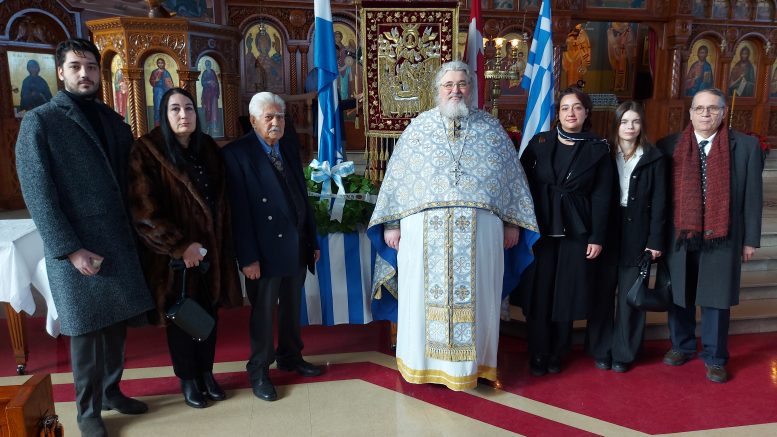
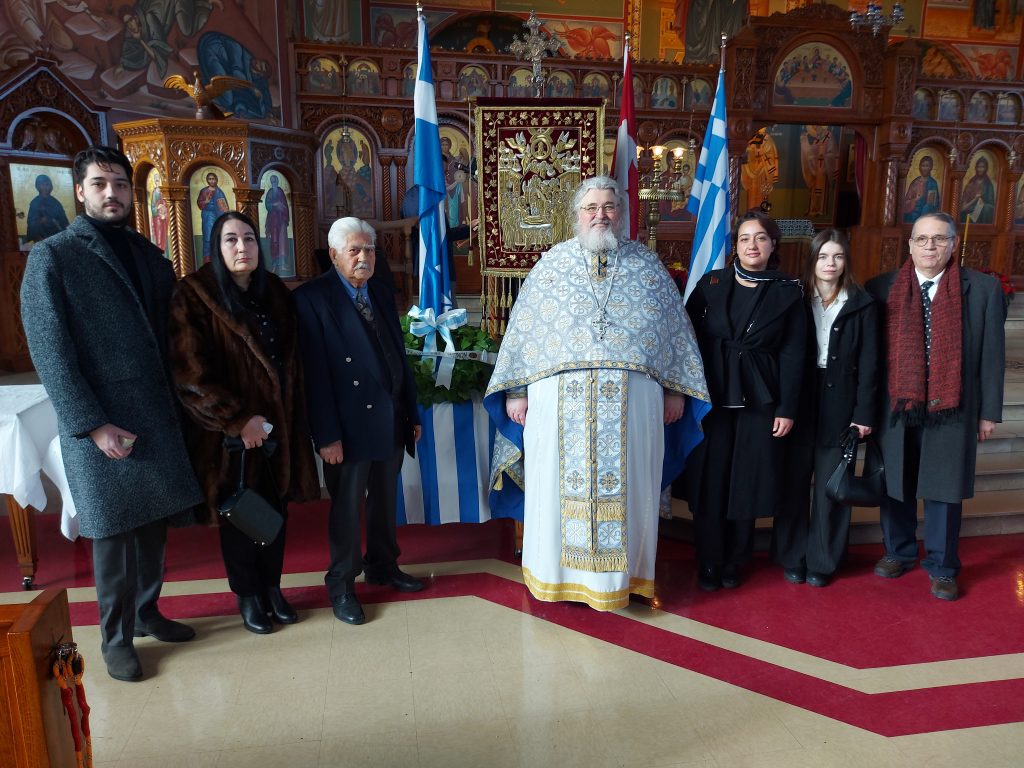

The morning light filtered through the tall, arched windows of the Church of the Annunciation of the Virgin Mary in Park Extension, casting long shadows across the polished floors while the scent of incense and old-world history filled the sanctuary. This solemn gathering on Sunday, December 14, 2025, served as a bridge between a tragic past in the mountains of Greece and a vibrant future for the Hellenic community in Montreal. As the congregation stood in hushed silence, the weight of the Kalavryta Massacre was felt through a collective commitment to heritage, the duty of remembrance for the innocent, and the preservation of a regional identity that defines the local experience for Canadians of Greek descent. The Kalavryta Association of Montreal, officially known as the Agia Lavra Brotherhood, organized this sacred event to honour the memory of the 1,313 souls who were lost on December 13, 1943. For the Canadians of Greek descent in attendance, the service was a profound introduction to a chapter of their ancestry that is defined by both immense suffering and incredible resilience. The church was decorated with the symbols of this legacy, including the blue and white flags of Greece flanking the intricate wooden iconostasis and the fleur-de-lis representing our home in Quebec. This juxtaposition of symbols reflected the dual identity of the diaspora, showing how the traditions of the Peloponnese have found a permanent home in Montreal.
During the service, the Reverend Father Charalambos stood before the holy altar to address the parishioners on the spiritual necessity of this memorial. He spoke of the responsibility and the debt that the living owe to those who were silenced during the Nazi occupation of Greece. Father Charalambos stated, “We have the responsibility, the debt, to pray and to remember these victims with a memorial service”. He further emphasized the importance of historical awareness for future generations, noting, “we must remember the ugly parts of history so that they do not happen again”. His words connected the historical atrocity to modern concerns, observing that hate continues in the world today and that the pursuit of peace is a continuous obligation. He expressed his hope that Christ, as the man of peace, would bring this necessary peace to the whole world. The atmosphere remained deeply reflective as the priest reminded those present that even though they were not there in 1943, they must still contemplate the pain of that black day.
The historical significance of the massacre was further illustrated through the personal stories that have survived the passage of time. Senator Leo Housakos previously brought these narratives to the Canadian Senate, highlighting survivors like Georgia Vagia. Georgia was only two days old when the massacre occurred, a child of the tragedy whose father was among the murdered men. Her mother, Efthymia Vagia, who became known as the last widow of Kalavryta, survived the fire and eventually saw her daughter move to Canada to build a new life as a citizen. Senator Housakos noted, “The echoes of history should always guide us toward a world where we stand tall for our values of freedom and democracy”. He emphasized the importance of the survivors’ courage in rebuilding their lives, noting that their perseverance teaches us the value of hope in the face of adversity.
Sotirios Athanasios Lambros, the president of the association, stood prominently in the church as he prepared to honour his compatriots. He provided a detailed context for the events of 1943, explaining that the 1,313 victims were civilians who had faulted in nothing at all. He described how the Nazi forces had occupied Kalavryta a week prior, deceiving the population with false assurances of safety while the commander, who spoke Greek, calmed the residents. This deception led to the morning of December 13, when the bells of Kalavryta rang out with a mournful and rapid rhythm, signaling the start of the roundup. The president noted that those executed included local residents and professionals such as professors, bankers, and police officers from across Greece who were working in the region at the time. He recalled the false promises made by the occupiers, who told the mayor and the locals that “they had no mood to harm the population”.
The president detailed the horrifying separation of families, where men and boys over the age of twelve were led to a depression in the land known as Laka tou Kapi. This site was located only a few hundred meters from the village and was surrounded by machine gun nests on the heights, leaving no possibility of escape. While the men were being executed, the women and children were locked inside the local elementary school, which the soldiers then set on fire. The survival of the women was only possible because a German soldier at the main door took pity on them and opened it, allowing them to escape the flames before he was executed by his own side for his act of mercy.
Perhaps the most moving part of the president’s account was his description of the aftermath during the harsh Greek winter. He explained that the women returned to the execution site to find their husbands, fathers, and sons lying in the snow. Because the village had been burned and their tools were destroyed, these women were forced to dig the earth with their hands and feet to place their loved ones in the ground, as wolves and foxes in the area would otherwise prey on the bodies. This image of ancestral mothers digging through the frost to preserve the dignity of their loved ones resonated deeply with the Canadians of Greek descent in the pews, serving as a stark reminder of the strength inherent in their bloodline. President Lambros asked, “What were they and what did they believe? What were they looking at in front of them as they shot?”.
The mission of the Kalavryta Brotherhood of Montreal extends beyond this annual memorial, as it seeks to strengthen Hellenic identity by ensuring that these regional histories are not forgotten by the younger generations in the diaspora. The association views these events as essential for maintaining a sense of pride and understanding of what it means to be Greek in a modern society. The president emphasized, “As long as Hellenism exists in the world and in our homeland, we will continue to honour December 13, 1943”. He expressed his wish that humanity never sees such crimes again, even though wars never stop.
As the Sunday service drew to a close, President Lambros approached the memorial table, which was draped with the Greek flag and held a wreath adorned with a white and blue ribbon. He laid the wreath in a simple, quiet gesture of respect that carried the weight of eight decades of history. Following this act of devotion, the congregation joined in a memorial chant for the souls of the departed. The president Sotirios Athanasios Lambros then concluded the event with a detailed presentation of the events of the massacre.