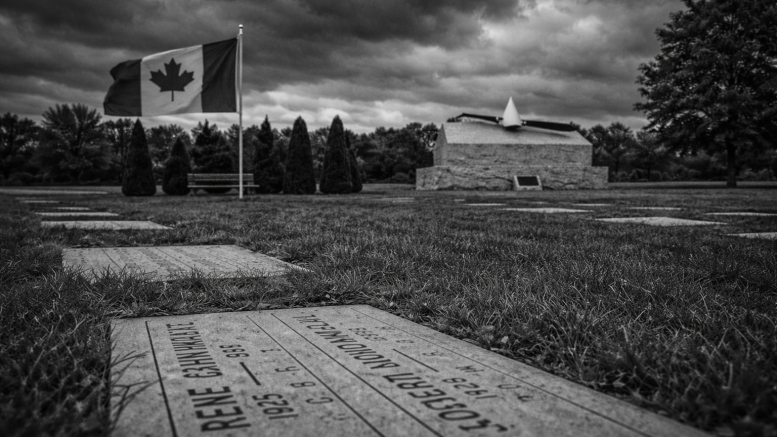
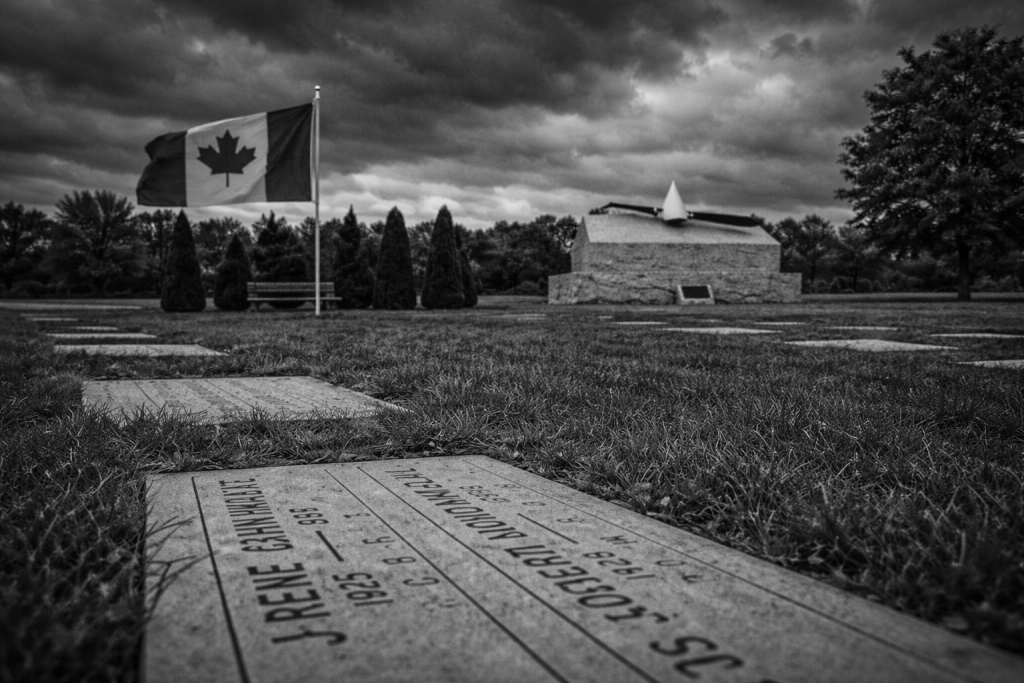

The grey granite markers stand in solemn formation across the snow-dusted grounds of the National Field of Honour in Pointe-Claire, a silent testament to the thousands who served under the Canadian flag. The air here carries a heavy stillness suitable for a National Historic Site that holds the remains of more than 22,000 service members. Within these ordered rows rests a distinct and historically significant cohort of approximately 44 Greek-Canadian veterans whose service spans the defining conflicts of the twentieth century. Their presence on this hallowed ground represents a profound intersection of Hellenic heritage and Canadian military history that has remained largely under-examined until now.
This cemetery in Montreal’s West Island serves as the final resting place for Canadian and Allied veterans and embodies a principle of absolute egalitarianism in death. The recently identified group of Greek-Canadian veterans includes individuals who fought in the Second World War, the Korean War and other conflicts. These men navigated the dual realities of the immigrant experience and military service. Their stories have often been absorbed into the broader archives of the Last Post Fund, yet they remain a vital chapter of the Greek diaspora in Canada. The preservation of their memory speaks directly to the obligation of the community to honour those who laid the foundation for the freedoms enjoyed today.
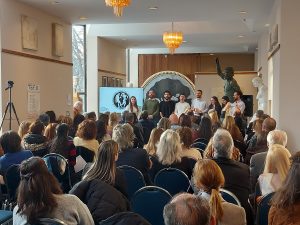
The discovery and commemoration of these veterans has transitioned from a purely archival exercise into a profound act of public and spiritual remembrance. On December 7, 2024, a landmark Trisagion memorial service was held directly on the cemetery grounds to honour these 44 individuals. The event, organized by Vimy MP Annie Koutrakis and Lac-Saint-Louis MP Francis Scarpaleggia, marked the first time the Greek-Canadian community formally gathered at the site to pay tribute to its own. Father Cristian officiated the solemn Orthodox rite, chanting the ancient hymn for the “repose of the souls” of the departed servants of God.
The atmosphere was heavy with emotion and cultural pride. Students from the Socrates-Demosthenes School, the educational crown jewel of the Hellenic Community of Greater Montreal (HCGM), stood as an honour guard, waving Greek flags in the winter air. Their presence symbolized the transmission of memory to a new generation, connecting the youth directly to the sacrifices of their ancestors. Families of the veterans lit candles at the graves, a deeply personal act of remembrance that bridged the gap between the formal military setting and the intimate traditions of the Greek Orthodox faith. The event was not merely a ceremony; it was a reclamation of identity, asserting that these men, though buried under uniform military markers, were sons of Greece as much as they were soldiers of Canada.
This spiritual mobilization runs parallel to an intense political advocacy campaign aimed at securing the cemetery’s future. The Last Post Fund, which has owned and operated the site since 1930, faces increasing financial challenges in maintaining the cemetery in perpetuity. This uncertainty has prompted a mobilization within the community to ensure the federal government assumes responsibility for the site. Former diplomat Robert Peck and Annie Koutrakis have spearheaded a parliamentary petition that calls upon the Government of Canada to nationalize the cemetery.
The petition underscores the significance of the site not just as a cemetery but as a symbol of Canada’s international engagement and sovereignty. The cemetery holds the remains of veterans from 23 allied countries, including 44 from Greece, 78 from the United States, 101 from France, and 380 from Poland. The initiative seeks to align the status of the Pointe-Claire site with other federally owned veterans’ cemeteries in Halifax and Esquimalt. Supporters of the movement argue that the federal acquisition of the land is the only viable path to guarantee the dignified treatment of these veterans for future generations.
This push for federal ownership aligns with commitments made during the 2025 federal election campaign. The Liberal Party of Canada platform document titled *Canada Strong* included a specific promise to assume ownership of the National Field of Honour. A written undertaking from the Minister of Veterans Affairs in July 2025 further identified this transfer as a government priority. The current advocacy efforts aim to hold the government to this pledge and secure a definitive timeline for the transition.
The year 2025 marked the 80th anniversary of the end of the Second World War, presenting a unique opportunity to honour the surviving members of that generation. The preservation of the National Field of Honour is positioned by advocates as a matter of national duty. The presence of Greek names among the rows of identical markers serves as a permanent reminder of the contribution made by Greek-Canadians to the defence of Canada and its allies. These veterans were part of a generation that bridged the gap between the old country and their new home through service and sacrifice.
The 44 Greek veterans identified at the site are more than statistics; they represent the “unmarked vanguard” of the community’s history. While public records of their individual names remain sparse, their collective story is one of resilience. They enlisted during an era when the Greek army was repelling Italian invaders in the mountains of Albania, a victory that galvanized the diaspora globally. They fought for Canada while their homeland endured brutal occupation. Today, their legacy is guarded by organizations like AHEPA and the HCGM, which view the veneration of military service as a core pillar of civic duty. The involvement of high-profile figures like retired Ambassadors Robert Peck and Peter MacArthur—both of whom have fathers buried at the site—demonstrates that this cause transcends political lines and touches the heart of the community’s leadership.
The petition specifically requests that Veterans Affairs Canada and Canadian Heritage develop an agreed action plan with the Last Post Fund. The petitioners urge the government to announce this plan by November 11, 2026. This date would serve as a symbolic milestone to honour the surviving veterans of the Second World War. The effort to secure the cemetery’s future is portrayed by community leaders as an essential act of remembrance that reinforces the Hellenic identity and its integration into the fabric of Canadian history.
Electronic Petition e-6951 remains open for signature on the website of the House of Commons until March 20, 2026 here: https://www.ourcommons.ca/petitions/en/Petition/Details?Petition=e-6951