
The deep reverence for family and the matriarchs who anchor the household remains a cornerstone of the Hellenic diaspora in Montreal. Within this cultural framework, the physical well-being of women from youth through their golden years commands profound respect and attention, serving as the bedrock for preserving the Greek language and heritage across generations. This vital aspect of family life recently echoed through the legislative chambers in Quebec City, where a concentrated political effort has emerged to address the biological realities of women. The ensuing debate highlights a significant legislative push to establish comprehensive healthcare frameworks for hormonal health, the political challenges encountered on the parliamentary floor, and the ongoing endeavor to draft binding legislation.
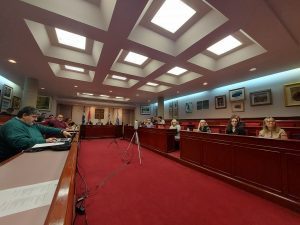
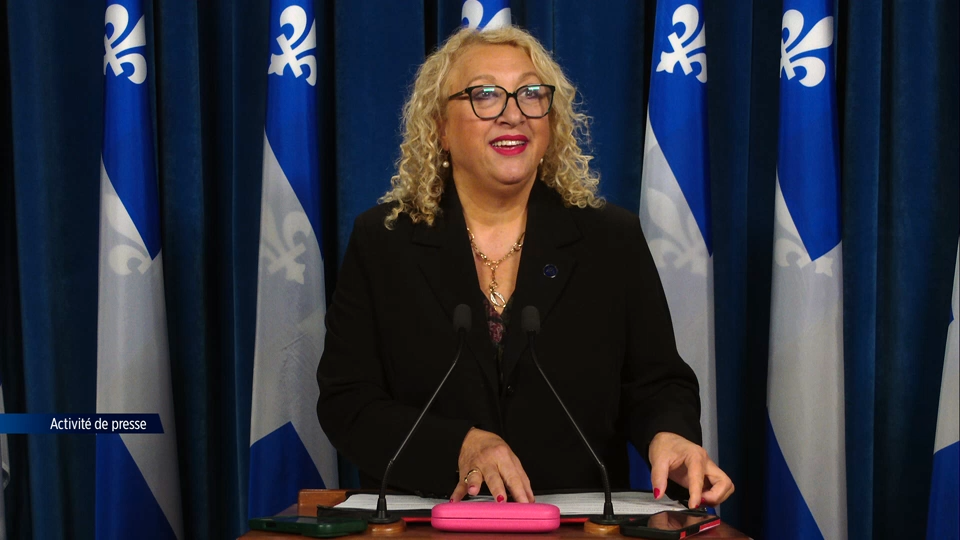
Standing in the red chamber of the National Assembly, wearing a dark blazer, a patterned blouse, and her signature glasses, the Member of National Assembly for Chomedey, Sona Lakhoyan Olivier, addressed her colleagues to introduce a formal motion. The legislative proposal asked the assembly to recognize that hormonal realities linked notably to menstruation and menopause can lead to important impacts on the physical health, mental health, and quality of life of women. The politician asked the provincial government to begin work on establishing a national policy on women’s health. She read from her official press release that women represent half of the population, and yet their hormonal health remains a blind spot in public policy. Following the provincial elections of 2022, 58 women were elected to the legislature, representing 46.4 per cent of all members. By 2025, women occupy 41 per cent of the positions in the Council of Ministers.
Publications like The Montreal Greek Times play a critical role in preserving regional Greek culture for future generations, organizing community initiatives, and strengthening Hellenic identity abroad through civic awareness. The health of the women in the community is intrinsically tied to this mission, as grandmothers and mothers are often the primary transmitters of the Greek language, Orthodox traditions, and cultural heritage. During an exclusive interview, the MNA emphasized the importance of bringing this dialogue directly to cultural communities. She noted that “the Greek media and community media are interviewing me”, hoping this grassroots awareness will reach the ears of the government. She reflected on how previous generations rarely spoke openly about these issues. The elected official observed that “our mothers and grandmothers never talked about menopause, never, ever talked about postpartum depression after giving birth”. Within the Greek-Canadian community, where elders are deeply integrated into daily family life and childcare, ensuring that women age in good health is highly relevant.
Within the various community organizations and local church groups, the topic remains hushed. The politician shared that women in these associations “never dare talk about it” openly, instead opting to “whisper to each other” about experiencing hot flashes, treating the subject “as if it’s shameful”. She is actively working to dismantle this stigma, declaring that “we do have a unique system, women”, and should be comfortable discussing biological realities. The Member of National Assembly noted that women are living longer and “they can continue to profit the community, the families”. She pointed out that if they are healthy and their hormonal transitions are properly managed without severe side effects from aging, “they can stay longer” in the workforce and “continue working”. Furthermore, they can be “helpful to the family”, especially providing care for “the grandchildren”. However, the current medical approach often falls short of meeting these needs. She argued that young girls are frequently given pain medication for severe cramps while being told their suffering is a standard biological experience. She stated that “since puberty, starting puberty, when we say to girls that, oh, it’s normal, it’s okay, and they’re in pain, you know, I find that there hasn’t been enough studies”. She mentioned knowing a young woman who “doesn’t have a doctor” and “she’s on Advil nonstop” since the age of 17.
To address this, the proposed strategy involves increased investments in research within Quebec universities and hospitals to provide doctors with better tools and clear guidelines on hormone replacement therapies. The MNA also brought up a systemic hurdle, mentioning that general practitioners “never send you to a gynecologist” unless there is a severe medical issue. She firmly believes that “each woman should have the right to a gynecologist, to go see a gynecologist” to receive specialized care.
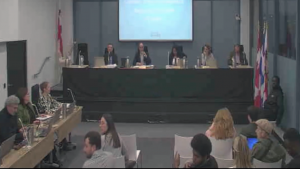
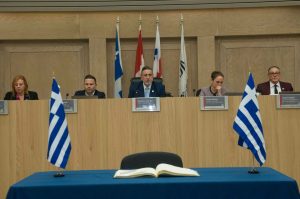
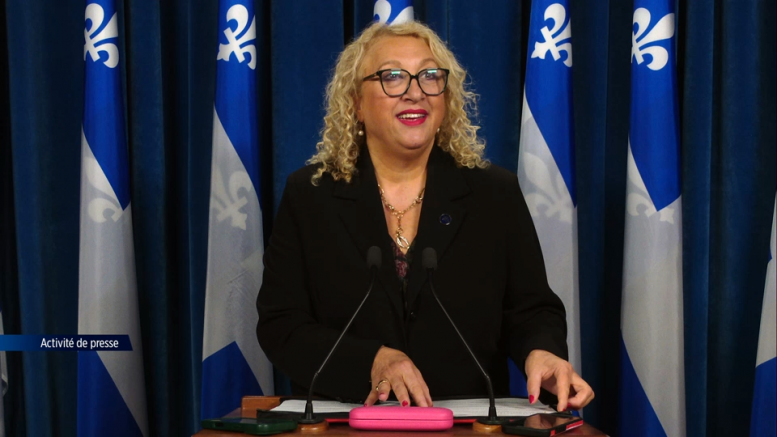
To amplify her message to the broader public, the elected official held a press activity on the morning of February 26 in the Bernard Lalonde room at the Parliament building. Standing at a wooden podium flanked by several blue and white Fleurdelisé flags, she addressed the media to explain the urgent need for medical research and preventive care. She reminded those in attendance that International Women’s Day “was born out of a struggle”, with the first day taking place in 1911 before being recognized by the United Nations in 1975. She challenged the status quo by asking “what have we actually done for women’s health”, considering Quebec made the choice to have “a universal health system for our entire population”. She stated that “from the very first time the girls have their period, young girls learn to endure pain”. She added that “there is little prevention, no structure to follow-up and no long-term data”.
Speaking personally during the press conference, she shared her own lived experiences to underscore the gravity of the situation. She spoke as a menopausal woman, describing menopause as a “major hormonal transition that affects the heart, the bones, mental health, memory, healthy aging, and essential aspects of life” that people often take for granted until they begin to disappear. She explained that “with age, hormones decrease progressively”, leaving many women with “reduced hormonal protection exposed to significant impacts on their health and quality of life”. She credited a 2021 documentary led by Veronique Cloutier for finally breaking the silence on the issue. That media mobilization led the Minister of Health, Christian Dube, to announce the coverage of two bio-identical hormones by the Régie de l’assurance maladie du Québec. While acknowledging this as an important step, she stressed the need for a comprehensive public policy, noting that isolated measures are insufficient to address a widespread health crisis. She believes the province has the necessary expertise, stating “the science exists, the institutions exist”, and “what’s missing is political will”.
Despite the unprecedented number of female elected officials in the legislature, the Coalition Avenir Quebec government voted against the motion without providing an explanation on the floor. When the governing party refuses a motion without notice, the proposal drops and cannot proceed to a full vote. The politician expressed feeling hurt and disappointed by the refusal, noting she was sure they were going to accept it given the numerous female ministers in the government. She speculated that the refusal might be tied to the government facing a 12 billion dollar deficit and cutting budgets across the board. She countered this by explaining that simply passing the motion “would have sent a great message” to researchers, encouraging them to focus on menopause research. She emphasized that elected female officials must lead this charge, asking rhetorically “are we going to wait for Celine Dion to come and replace us” to advocate for women. She pointed out that the federal Minister of Health recently announced an investment of 1.9 million dollars for perimenopause and menopause research, showing that the movement is already gaining traction. She had previously brought this subject to the Liberal Party over the past three and a half years during their meetings, and they “were ready to do something about the menopause”.
Refusing to let the initiative stall, the Member of National Assembly confirmed she is now using other parliamentary tools to advance the issue. She stated that “I’m working on a project for a law, so a bill”. The objective is to present this formal legislation before June, which would force a formal vote and bring the matter before a parliamentary commission. At such a commission, medical specialists, universities, and hospitals could testify and provide official recommendations to the government. During the morning press briefing, journalists repeatedly asked questions regarding the internal politics of the Quebec Liberal Party and the Ethics Commissioner. The MNA is currently sitting as an independent member. She declined to discuss partisan matters, stating she wished to remain focused on the subject of women’s health and the upcoming International Women’s Day. The press conference officially concluded at 9:16 in the morning.