
Local Journalism Initiative Reporter
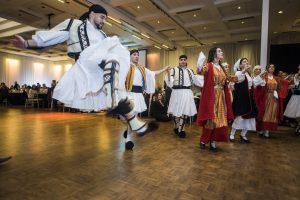
The steady rhythm of regional folk music and the vibrant colors of traditional costumes filled the Palace reception halls in Laval, Quebec, transforming a winter afternoon into a warm celebration of Hellenic heritage. Guests gathered around elegant banquet tables to witness a revival of ancient customs, surrounded by young dancers breathing life into age old stories of community and renewal. This lively gathering served as a vital bridge to the past, aiming to educate the diaspora about the deep historical roots of the Greek carnival season and the enduring importance of preserving cultural identity and the Greek language abroad.
The Greek carnival, often referred to as the “Apokries” season, represents a three week period of uninhibited festivity that immediately precedes the solemn fifty day fasting period of Orthodox Lent. Rooted in antiquity long before the advent of Christianity, these observances originally functioned as agricultural rites designed to awaken the earth from its winter dormancy and ensure a bountiful spring harvest. Early religious leaders initially viewed the celebrations as idolatry, but the customs were so deeply embedded in the local populations that they were eventually absorbed into the calendar. During this designated window of revelry, participants are granted societal permission to engage in absolute satire, openly mocking everything from everyday hardships to prominent authority figures such as presidents and priests. The tradition relies heavily on symbolic costumes, rhythmic music, and communal dances to literally stomp the ground awake, bringing warmth and life back to the community after the cold months.
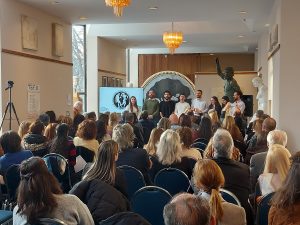
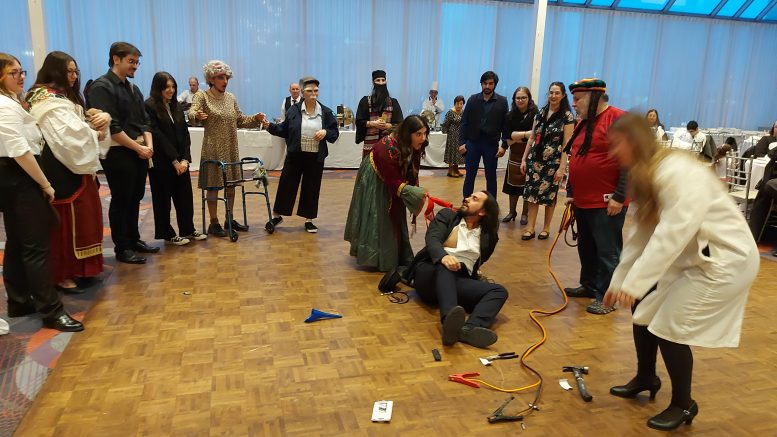
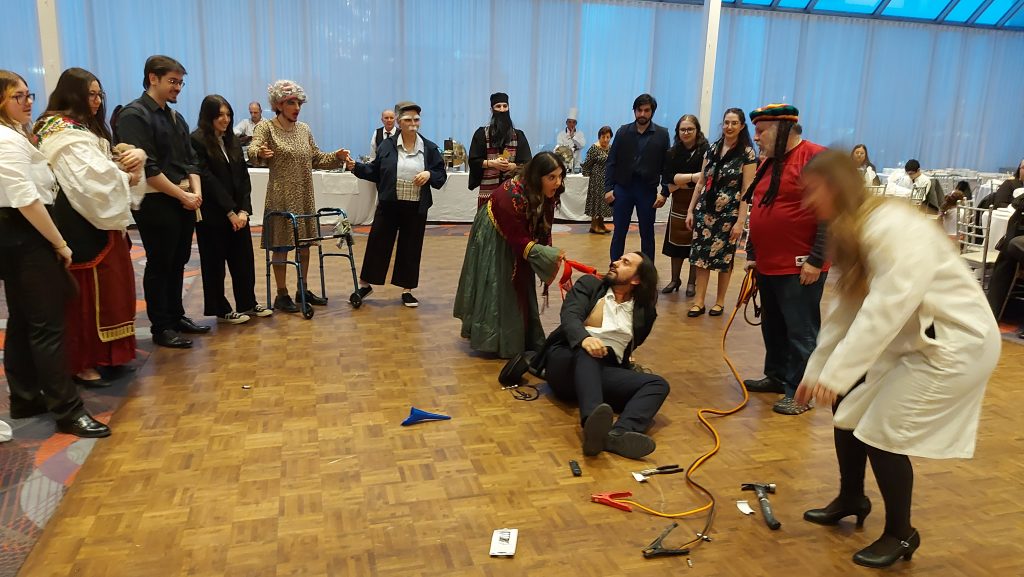
Organized by the Hellenic Cultural Academy Romiosyni on February 22, 2026, the civic event focused entirely on the observance of these rich traditions. Performers adorned the dance floor in an array of authentic regional attire, while other participants wore humorous modern outfits, including striped prisoner uniforms, local hockey jerseys, and animal ears to reflect the festive spirit. The expansive hall accommodated generations of families who watched as dancers linked arms to form large, joyous circles across the wooden floor. Dance instructor and master of ceremonies Anthony Beliotis welcomed the attendees and guided the audience through the intricate historical depth of the diverse performances. Beliotis explained that his group used to hold this event annually before the global pandemic, and returning to the venue marked an important milestone for the community. He stressed the gravity of the academy’s mission, declaring that the community must maintain its morals and customs.
To illustrate these customs, the youth group presented an elaborate theatrical dance narrating a complex village wedding. The central storyline followed a young woman from the village and a young man who had moved to the city, brought together by an enthusiastic local matchmaker who decided they were a good match. As the vibrant performance unfolded, hidden secrets were revealed to the audience, including prior arrangements, family disagreements, and unexpected relationships that added comedic drama to the presentation. The dancers utilized specific regional music and choreography to convey the narrative, beginning with the lively Yianka dance to engage the crowd, acting as a reminder of the carnivals in Patras and the Ionian islands. The troupe later performed the Pyrgousikos dance, during which the matchmaker character excitedly grabbed the village priest by the beard, drawing laughter from the attendees. They continued with the Gatos from Eastern Thrace, a traditional dance heavily associated with the region stretching toward Constantinople.
The storytelling advanced with the Piperi, a traditional folk song where participants follow lyrical instructions to mimic grinding pepper using different parts of their bodies, including their hands and feet. Another notable segment featured the Base dance from Thrace, an intense routine where men use wooden sticks to keep a steady rhythm at a specific distance from one another. During this specific dance, a symbolic baby is passed mouth to mouth among the performers, and the dancers must ensure the child does not fall to the ground. If a dancer drops the child, the mother character retrieves the baby and playfully beats the performers with a stick. The performers highlighted the narrative tension by executing the Sigano and Pentozali dances from Crete, referencing local lore where a young man warns the village of his actions if he cannot marry his chosen bride. Additional dances represented traditions from Samos, specifically the Avas dance, aiming to awaken nature and ensure a good year.
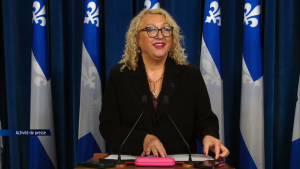
he young performers fully immersed themselves in the cultural narrative, seamlessly blending historic folklore with theatrical comedy. One of the most popular characters of the afternoon was Mama Melpo, an elderly grandmother who navigated the dance floor using a metal walker, played by a performer named Dimitris. Dimitris committed completely to the persona, altering his appearance to look like an older woman and interacting playfully with the crowd while adjusting his hair curlers. Discussing his approach to the character, Dimitris noted the ambiguity of the role. “We have no confirmed age. We went with a Yaya look and I think I pulled it off pretty well,” he said. He explained that his ultimate goal was to portray an authentic character to ensure the audience enjoyed the spectacle. “Just look at me,” Dimitris joked. “It is not the hardest thing in the world to do, but really killing your tongue, killing, showing that you are about sixty years older really,” Dimitris explained. He added that this commitment is what it means to do a performance, as long as everyone enjoys the presentation. “If I was intense, I was intense,” he affirmed.
Evgenia, a vocalist who portrayed the beautiful bride in the performance, reflected on the profound personal impact of participating in the cultural academy. She expressed that singing traditional Greek music makes her feel much more connected to her culture because it represents her core identity. “Personally, it makes me feel much more connected to my culture, because it means what I am,” Evgenia shared. She emphasized that such community gatherings are instrumental in keeping the diaspora together and maintaining the cultural fabric of Montreal. “I think I would not be me if I did not do Greek singing, because it is a big part of my life that I think if I did not do it, something would be lost,” she stated. She added that engaging with the music helps maintain Hellenic traditions even for those who do not speak the Greek language fluently on a daily basis. “I think it is a good way to keep your culture, to keep your culture, even if you do not speak Greek all the time, not always at church, but at least to do the singing, because it keeps the community, you follow the music,” Evgenia concluded.
The ambitious production required extensive preparation and dedication from the young dancers, representing approximately thirty children and eighteen older youth within the academy. Sponsor Peter Strifas commended the rigorous efforts of the youth, recognizing the value they bring to the broader community. “Truly it was very nice. The children tried, it was exciting,” Strifas stated following the performance. He highlighted the comedic elements of the show, noting specifically that the grandmother character resonated strongly with the attendees. “Honestly it was something so nice. Especially the grandmother was very, very nice. We all laughed, I think,” Strifas remarked. Civic support from twenty local sponsors provides the organization with the means to secure necessary traditional costumes and continue offering these vital educational experiences to the community. Supporters included the Palace, Casablanca, the Corinthian Association, the Messinian Association, and the Tsoroidis family. As the two hour cultural presentation concluded, Beliotis thanked the parents and grandparents, stating that without them the children would not be there. The dancers then left the floor to prepare for a meal. Following the final act of the theatrical wedding, the venue opened a large pasta buffet and sweet table for all attendees, alongside a raffle featuring large gifts and door prizes. Event organizers proceeded to play music in the reception hall for guests who wished to remain and dance the rest of the afternoon.