
Local Journalism Initiative Reporter
The air inside the community hall in Laval was thick with the scent of traditional Greek spices and the resonant sounds of the homeland as members of the Corinthian Association of Greater Montreal gathered to usher in the new year. Gold and blue flags stood proudly against the walls while a decorated tree twinkled in the corner, setting a festive stage for a night dedicated to the preservation of Hellenic identity and the rekindling of ancestral ties. This gathering represented more than a simple social dinner; it served as a vital cultural bridge for the Peloponnesian diaspora, focusing on the weighty themes of generational continuity, the resilience of regional associations in Quebec, and the sacred nature of the vasilopita ritual in maintaining a sense of belonging far from the shores of the Corinthian Gulf.
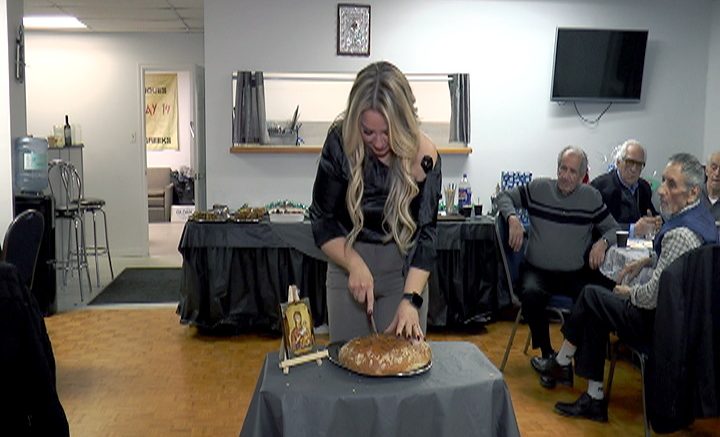
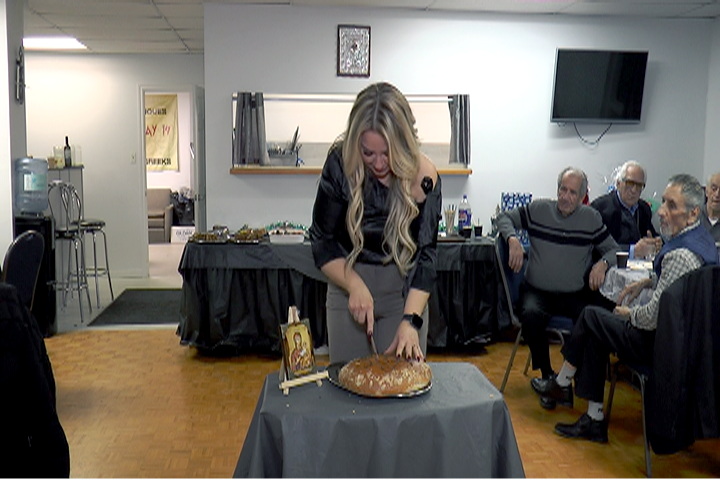
The vasilopita tradition remains a cornerstone of Greek life, functioning as a symbolic bridge between the sacred and the secular at the dawn of each year. Known linguistically as Saint Basil’s pie, the custom involves the baking of a bread or cake that contains a hidden coin, or flouri, intended to bring divine favour to the individual who discovers it in their portion. While the recipe varies by region from the sweet, brioche-like tsoureki to the custard-based galatopita, the ritual surrounding its distribution is strictly observed. The head of the household or organization etches the sign of the cross over the crust with a knife before slicing pieces in a specific order of precedence, often beginning with symbolic portions for the Lord, Saint Basil, and the poor, before moving through the family by age from the eldest to the youngest. This practice is rooted in a beloved legend where Saint Basil of Caesarea, tasked with returning a collective ransom to the citizens of his city, baked the jewellery into loaves of bread to ensure a fair and miraculous redistribution to the rightful owners. Today, the tradition serves as a primary vehicle for communal blessing, ensuring that the virtues of charity and hope are carried forward into the next twelve months.
The evening was characterized by a profound sense of kefi, that uniquely Greek expression of spirited joy and passion that moved guests to the dance floor shortly after the meal. Men and women joined hands in circular dances, with leaders frequently holding a white handkerchief to allow for the acrobatic twists and deep lunges that characterize the proud dances of the Peloponnese. The energy reached a peak when a member of the association Mr. George Plessas engaged in the traditional act of plate smashing, an exuberant display of high spirits that left white shards scattered across the wooden floor as a testament to the intensity of the celebration.
The custom of plate smashing, though often associated with modern Greek nightlife, carries deep historical and symbolic weight within the context of Hellenic celebration. It is widely considered an expression of kefi so abundant that it must be released through a controlled act of destruction, symbolizing a break from the past or a defiance of the finality of grief and hardship. Some ethnographic theories suggest the practice may have ancient roots related to the concept of the funeral feast, where breaking items served to ward off evil spirits or signify that the living no longer had use for the earthly goods of the deceased. In the contemporary diaspora, the act has evolved into a celebratory ritual often seen at weddings and communal feasts to honour a particularly moving musical performance or a skilled dancer. While many modern venues in Greece have replaced ceramic plates with flowers for safety and economic reasons, the act remains a potent symbol of the Greek spirit’s refusal to be dampened by the mundanity of everyday life, transforming a simple piece of crockery into a vehicle for communal catharsis and shared joy.
Association president Maria Brakoulias, who has held her leadership role for two years, spoke to THE MONTREAL GREEK TIMES newspaper with conviction about the necessity of these gatherings for the survival of the group. She noted that the Corinthian Association of Montreal Apostle Paul has deep roots, having been founded in 1968. “Today we held the annual vasilopita,” Brakoulias said. “As you know, the Corinthian Association of Montreal has shrunken quite a bit over the years, but we are keeping it quite alive. We try to gather at least once a year. Many members have left unfortunately, but the younger members have kept it. The Corinthian Association of Montreal will not die. We will always be here”. She recalled a time during her childhood when her late father served on the board and the association boasted between 700 and 800 members.
The sentiment of duty toward the previous generation was a recurring theme among the guests. Aleka and George, siblings and children of former board members, emphasized that attendance at such events is a debt of honour to their parents. “We must try to give, to rejuvenate the association, because many of the old ones have unfortunately left,” Aleka stated. “And others are sick, they have grown older and it is more difficult. That is why those of us who are the other generation try to communicate with people so they can come. Because if they do not come, there will be no association. We owe it to our parents, our fathers, our mothers, everyone”. George echoed this perspective, viewing the growth of the community through a lens of momentum. “The more members we have, it is an important thing,” he said. “I remember in the past, in the eighties and nineties, it was something positive. We think of the memories and we owe it for our fatherland, the Corinthia. As people come more, this thing will strengthen. It is like a snowball effect”.
Personal connections to the soil of the Peloponnese remained at the forefront of the evening’s conversations. Vassilios Serfas, a native of Zevgolatio, Corinthia, expressed his happiness at the reunion. “With great joy, after quite a while, we found ourselves here for the cutting of the vasilopita,” he said. Another guest, a former president of the Argolida Association, attended to support the Corinthians despite the dissolution of her own regional group. “I am from Kranidi, Argolida,” she said. “I am very happy for you and I have come many times when you gather, even while we have been lost. Good fun to everyone”. These stories highlighted the diverse yet unified experience of the diaspora, where regional loyalties from the Peloponnese coalesce into a broader Hellenic pride in Montreal.
The hall was filled with the sounds of well wishes as members sat around tables decorated with white linens. One attendee noted that their entire table hailed from the same village, Stymfalia, Corinthia. “I wish everyone health and love,” she said, reflecting the communal warmth that defined the night. Other members shared simple, heartfelt prayers for the future, with one guest stating, “I wish for everyone to have health, peace, and for your association to slowly grow. May you be well and thank you for the evening”. Another member added, “I wish for health and for us to always try to be here again next year and always”.
The evening also included a raffle where guests won various prizes, adding an element of excitement to the proceedings alongside a sweet table laden with traditional desserts. The event, which took place on Saturday, January 24, at 6:00 p.m. at the Hall of the Arcadian Association at 4391 Saint Martin Boulevard West in Laval. The program concluded with a final message from the organizers, thanking the community for their participation and offering wishes for a prosperous 2026.