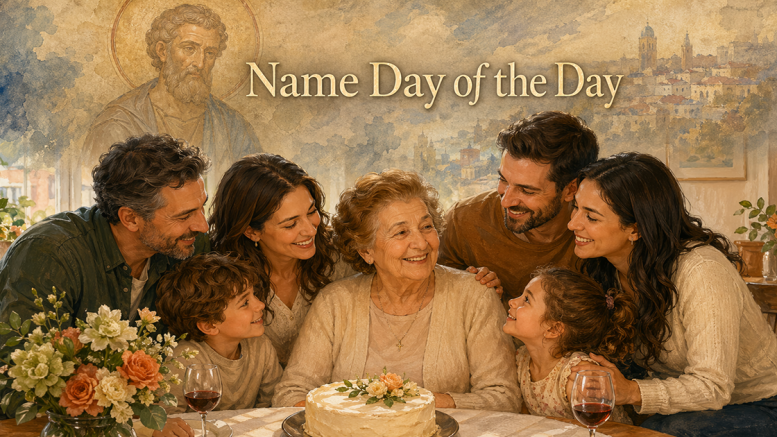
Today’s name day will not light up every contact list the way James or Catherine might, but that is part of its charm. If you know a Magnos, a Magna or a Magnis, you are carrying a piece of Greek naming tradition that still feels uncommon in English, distinctive enough to start a real conversation at work, at school or over a family group chat.
The name Magnos appears to belong to the old Greek name-world shaped by place, identity and sound, and it likely connects with Magnes, the ancient ethnonym linked to the Magnetes of Thessaly and later to the region of Magnesia. From that same Greek root came the Latin Magnes and the place-name Magnesia, which eventually gave English scientific words such as magnet and magnesium after stones and minerals first associated with that region. In other words, this is a name with deep classical soil and an unexpectedly modern echo in everyday language.
In Eastern Orthodox Christianity, a person’s name day is the feast day of the saint after whom they were named at baptism.
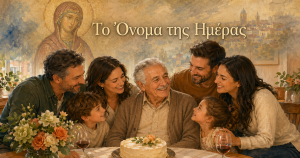
There is something memorable about a name like this. It suits the grandfather whose presence quietly pulls the whole family table together, the colleague everyone drifts toward when things need to be settled, or the across-the-street neighbour whose steadiness has made him part of the block for years. Even Magna, rare and strong in form, has that same sense of gravity, the kind of name that feels self-possessed without trying too hard.
So today, Chronia Polla! to everyone celebrating Magnos, Magna and Magnis. If you know someone with one of these names, send the wish along. And if your non-Greek friends have never heard of a name day before, this is a good day to introduce them to the custom with a name they are unlikely to forget.