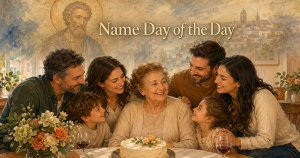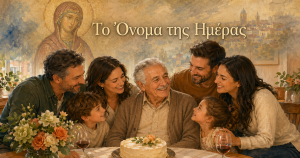
Today’s name day may be centred on Rodopi and Bethesda, but the custom travels easily beyond family circles. If you know a Rodopi in Montreal, or someone named Bethesda through a biblical or place-name tradition, this is one of those small Greek moments that can become a warm, unexpected message between friends, classmates, neighbours and co-workers.
Rodopi comes from the Greek Ροδόπη, a name known since antiquity and tied to the Rhodope mountains of Thrace and the Balkans. The first element is linked to Greek rhodon, “rose,” while the second has been associated in the ancient form with “face” or “appearance,” giving the name an old poetic texture that survived through myth, geography and personal naming. Bethesda comes through Greek Βηθεσδά from the biblical place-name, itself from Aramaic beth hesda, usually understood as “house of mercy” or “house of grace.”
In the Eastern Orthodox Christian tradition, a person’s name day is the feast day of the saint or sacred figure after whom they were named at baptism.
Rodopi is one of those names that seems to arrive with its own atmosphere. It suits the theia whose home is full of flowers well before the rest of the street has planted anything, and the university friend whose presence softens a room without trying. Bethesda carries a gentler, older resonance, the kind of name that fits a godmother remembered for her kindness or an across-the-street neighbour who always asks after everyone in the family.
Today’s circle can naturally widen to others also marked on the calendar, including Mavros, Mavra and Timotheos, but Rodopi and Bethesda lead the day. Chronia Polla! to everyone celebrating, in Greek and non-Greek circles alike. If you know someone with one of these names, send the message along today and let a Canadian friend discover what a Greek name day feels like.