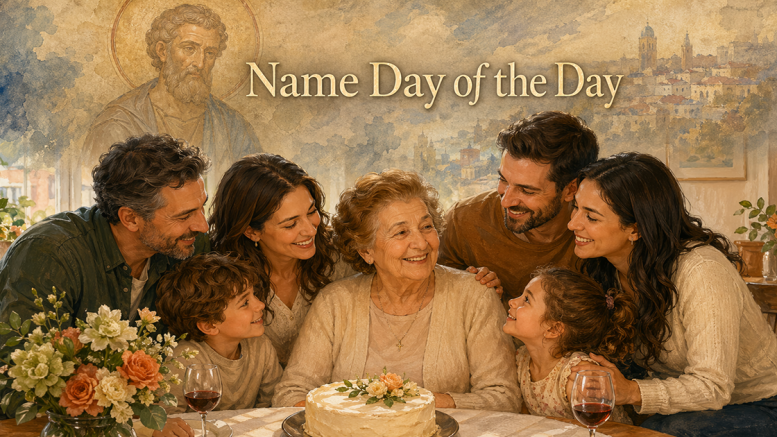
Today’s name day travels easily beyond the family group chat. If you know an Olga at work, an Olha in your neighbourhood, or an Olya from school, they share in a Greek name day today too. And for Greek families, Efimia brings with it the familiar circle of Efi, Foula and other affectionate forms that have been heard for generations.
Efimia comes from the Greek Ευφημία, built from eu, meaning good or well, and pheme, meaning speech, utterance or reputation. In classical Greek, euphemia referred to words of good omen and respectful speech, the same root behind the English word euphemism. Olga comes into Greek through the Slavic form Ольга, which ultimately traces back to Old Norse Helga, from heilagr, meaning holy or blessed, a reminder of how names moved across Viking, Slavic, Byzantine and modern European worlds before landing naturally in Canada.
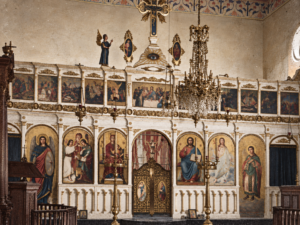
In Eastern Orthodox Christianity, a person’s name day is the feast day of the saint after whom they were named at baptism.
Efimia has a graceful sound that suits the theia who always knows how to say the right thing at the right moment, or the godmother whose voice can settle a whole room. Olga carries a different weight, steady and self-possessed, the kind of name that fits the across-the-street neighbour who seems unshakeable, or the colleague everyone trusts when things get complicated. Between them are all the smaller, everyday versions of celebration too: an Efi in the family text thread, a Gitsa from an older generation, an Olga in a downtown office who may never have heard of name days at all.
Chronia Polla! to everyone celebrating today, in Greek and non-Greek circles alike. It is a good day to text an Olga, an Olha, an Olya, or an Efimia you know, say happy name day, and share a small piece of Greek tradition with someone who may not even realize the day belongs to them too.