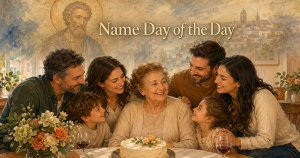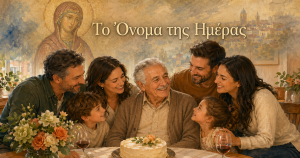
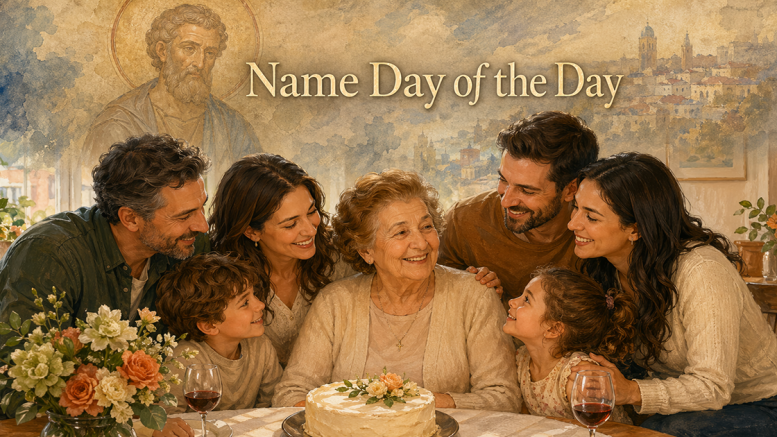
Today’s name day is a chance to surprise someone with a very old name. Nicodemus is the form most English speakers will recognize, while Akylas keeps its Greek shape more closely, so this is the kind of day when a cousin named Nikodimos, a colleague named Nicodemus, and an uncle known simply as Dimos can all be part of the same celebration.
Nicodemus comes from the ancient Greek Νικόδημος, built from nike, victory, and demos, people or populace. It is a classical Greek formation that later entered Christian scripture and then travelled into Latin, French, English and other European languages, which is why it can sound both distinctly Greek and quietly familiar abroad. Akylas reflects the Greek form Ακύλας, itself taken from the Latin Aquila, meaning eagle, a name that moved from the Roman world into Greek-speaking use in antiquity.
In the name day tradition of Eastern Orthodox Christianity, a person’s name day is the feast day of the saint after whom they were named at baptism.
There is something vivid in Nicodemus, and you can feel it in the papou who still walks into every room with calm authority, or the teacher whose presence settles a class without much effort. Akylas carries a sharper outline, the sort of name that suits the old friend who sees everything first, or the across-the-street neighbour who always seems alert to what is happening on the block. And if your family has a Dimi or Dimos at home, today belongs to them too, in that affectionate Greek way names stretch and shorten without losing their centre.
Chronia Polla! to everyone celebrating today, whether they use the Greek form, the English one, or a family nickname. It is a good day to text a Nicodemus, a Dimos, or an Akylas, say happy name day, and share a small piece of Greek tradition with someone who may not even know they are being celebrated.