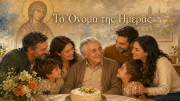
Today, the Greek tradition of name days reaches well beyond family. Every Magdalene, Magdalena, Madeleine and Madeline you know shares the day with Greek Magda and Magdalini, and every Patrick in your contacts can be wished too, alongside rarer Greek names such as Theognostos, Menander and Marilena.
Magdalene comes from Greek Μαγδαληνή, originally meaning “from Magdala,” the place-name attached to Mary Magdalene in the New Testament; through Latin Magdalena and then French and English forms such as Madeleine, Madeline and Magdalene, it became a truly international name. Patrick follows a different path, from Latin Patricius, meaning “patrician” or “noble,” which entered Greek as Πατρίκιος and then modern use as Patrick and related forms. Menander comes from ancient Greek Μένανδρος, built from menos, force or spirited strength, and aner, man, while Marilena is a modern Greek blend of Maria and Eleni. Theognostos is a learned Greek compound from theos, God, and gnostos, known.
In the Eastern Orthodox tradition, a person’s name day is the feast day of the saint after whom they were named at baptism.
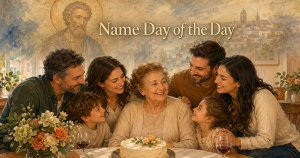
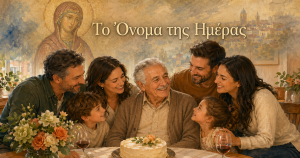
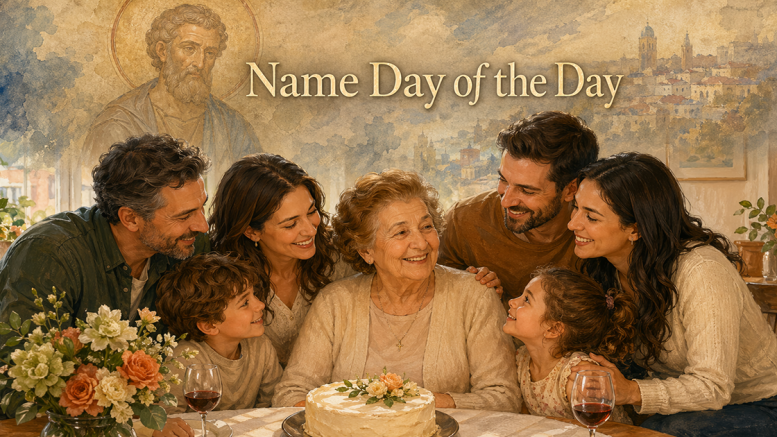
There is something easy to picture in today’s circle of names. A theia Magda who brings quiet steadiness to every family table carries the same name heard in classrooms and offices across Montreal in Madeleine or Madeline. Your co-worker Patrick, your customer Pat, or the neighbour down the street may have no Greek connection at all, but the wish still lands warmly. And a papou Menander, a godmother Marilena, or an old family friend named Theognostos keeps alive the older, more distinctly Greek side of the calendar, where classical language and modern life still meet.
Chronia Polla! to everyone celebrating today, in Greek and non-Greek circles alike. If you know a Magda, Madeleine, Madeline, Magdalene, Patrick, Marilena, Menander or Theognostos, today is a lovely day to send a quick happy name day text and share a small Greek tradition with someone who may not even know it is theirs too.