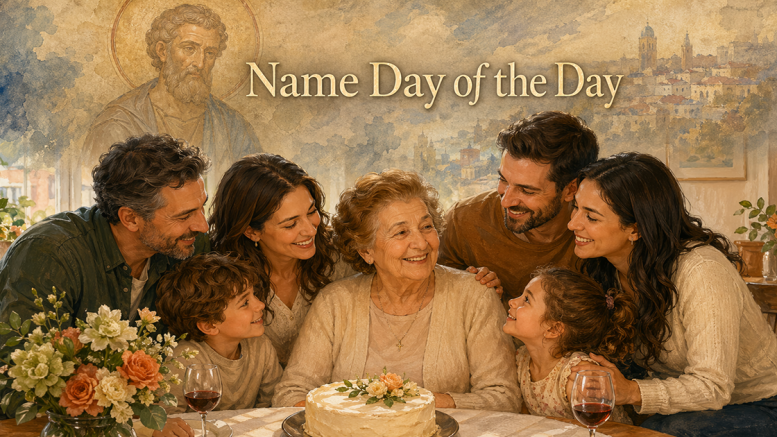
Today’s name day may not spill as easily into English as James or Catherine, but it is still one of those very Greek traditions that can start a conversation anywhere in Montreal. If you know an Anargyros or a Germanos, at home, at work, or in your contacts list under a family nickname, today is the day to reach out. Even people who do not usually mark the custom often appreciate the message once they hear what a name day is.
Anargyros comes from Greek Ανάργυρος, built from the prefix an- meaning “without” and argyros meaning “silver.” In Greek, silver also carries the older sense of money or payment, so the name came to mean someone not taking money, generous in service, or free of charge. Germanos comes through Greek Γερμανός from the Latin Germanus, originally meaning “German” or “of the Germans,” and in Latin it could also carry the sense of something genuine or closely related, a word with a long Roman afterlife before becoming a personal name in Christian use.
In Eastern Orthodox Christianity, a person’s name day is the feast day of the saint after whom they were named at baptism.
Anargyros carries a strong human warmth in Greek life, and you can feel it in the uncle who is always the first to help, the pharmacist who takes time with every older customer, or the family friend who never lets a favour become a transaction. Germanos has a steadier, more formal sound, the kind of name that suits a respected professor, a thoughtful godfather, or the across-the-street neighbour who still clears a patch of sidewalk before anyone asks.
So if there is an Anargyros, Anargyri, Anargyroula, or Germanos in your circle, send the text today. Chronia Polla! And if the person has never really celebrated a name day before, all the better: it is a lovely chance to pass on a small Greek custom and let it brighten someone else’s day.