By Dimitri Papadopoulos,
with files from John Coconas
The morning air in Montreal often carries a biting chill in January, but forty years ago, the atmosphere around the corner of Sherbrooke Street and Clark was thick with a different kind of intensity as the skyline was overtaken by towering plumes of smoke and the searing glow of a tragedy in progress. Looking back at the photographs from that day, one sees the desperate height of the ladders and the silhouette of the belfry against a grey sky, a sight that marked the beginning of a profound era of reflection for the Hellenic community. This milestone serves as a moment to examine the deep historical roots of the Greek diaspora in Montreal, the persistent struggle for cultural preservation through education and faith, and the unbreakable spirit of a people who turned the ashes of their first cathedral into a foundation for future generations.
It was January 16, 1986, a date many in the community still refer to as a day of ill omen when the Holy Trinity Greek Orthodox Church, the first Greek church ever established in Canada, was surrendered to a fiery hell. The news was carried live by television channels and radio stations, prompting hundreds of Greeks from every corner of the city and the suburbs to leave their jobs and head toward the site of the disaster. They were driven by a strange feeling and a soul deep desire to be close, to intervene, and to help prevent the evil. They hoped to stop the wrath of Hephaestus and save their beloved church, the one they called “Ayiatriàda”. Helpless to do anything, they screamed and cried out of anger and indignation, as defined by all those feelings that sprang indefinitely from their souls.
The images of their lives were interwoven with the church, and those memories played out in the reflections of the fire during those terrible moments. It was a moment too large to fit a whole history, the history of the Greeks which was written so strongly, so bravely, and so truly within the walls of the church. The fiery tongues poured out from the vitals of the Holy Trinity, massive and powerful, as if a giant flaming soul was anxious to touch the heavens. There was no salvation left. The smoke, which signaled the end of the evil, came like an unprecedented scent to soften the harsh atmosphere of that frozen January. There was no talk or discussion, as the only sounds were the creaks in the embers and the lamentations and sobs of the Greeks.
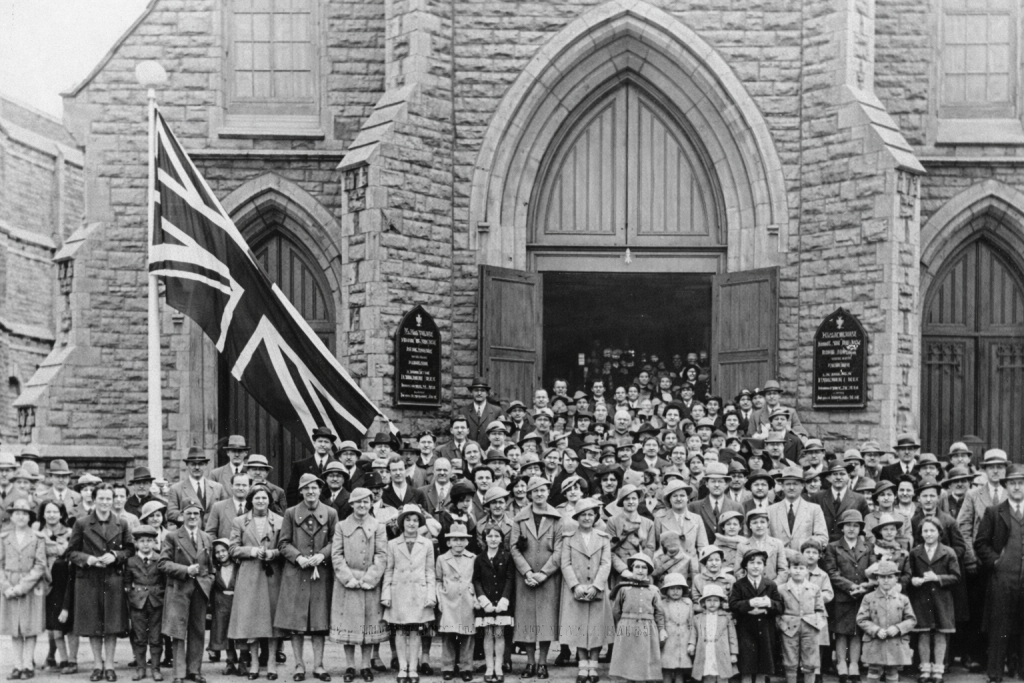
Holy Trinity had been surrendered to the fire forty years ago, yet the memories remain vivid because the church represented two great pieces of history. One part preceded the fire and the other followed it. The first section contains the difficult years of creation, the efforts and the visions of the first immigrants to take root in the new homeland. The second section covers everything that followed the 1986 blaze. This church emerged from a great evil, the division caused by the political passions of the Greeks in the early twentieth century, only to leave through another great evil, the impasse created by the mistakes of the Greeks.
The history of the community is tied to the events of August 10, 1920, in the grand hall of the city hall of Sèvres, France, where the reality of a Greece of two continents and five seas was taking shape. The creator of New Greece, Eleftherios Venizelos, certified with his signature that the dream of the Hellenic nation was marching through the lands of Ionia, Pontus, and Eastern Thrace. After the Treaty of Sèvres, the dream of the Great Idea had almost become a reality. Greece became the state of two continents and five seas, but unfortunately, this lasted only two years. National division lurked at this critical moment for Greece. Furthermore, the political and economic interests of the European powers, who were friends and allies of Greece, supported Turkey, which was their opponent in the First World War. The consequence of these events was the collapse of the Asia Minor front in August 1922, the disorderly retreat and departure of the Greek army and population.
While King Constantine was in exile in Switzerland, his followers were planning the physical elimination of the creator of Great Greece. The plan for the assassination of Eleftherios Venizelos, at the moment he was returning to Greece with the Treaty of Sèvres in his briefcase, unfolded at the edge of the Lyon railway station. The hospitalization of Venizelos for his slight injury after the attempt of July 30, 1920, forced him to postpone his return to Greece for a few days and reach Piraeus with the battleship Averof on August 17. These events in the motherland did not leave the Greeks abroad unaffected. The small Greek colony of Montreal experienced the division and received terrible influences that interrupted the until then admirable path toward the completion of its visions. The newly founded community became a victim of the disastrous division. Those who just a few years before were united and struggling to stand as a cultural community in their new homeland found themselves facing each other through an unprecedented rivalry of hatred and enmity.
Divided into Venizelists and Royalists, the Greeks of Montreal fought battles of mutual extermination with such contradictions that violent acts, including beatings and stonings, occurred inside and outside the church of the Annunciation. The Annunciation was the first church of the Greeks, and on May 5, 1910, the foundation stone of the first Greek Orthodox community church was placed on the purchased lot at 753 Saint Lawrence Boulevard. Eight months later, on December 10, 1910, the inauguration of the first Greek Orthodox church of Canada took place with the name Annunciation of the Theotokos. For fifteen long years, the bickering and division undoubtedly slowed progress in the community. However, these disagreements eventually led to the successful purchase of the Holy Trinity complex, in which Hellenism had placed all its hopes and visions, since its value reached six million dollars.
On December 3, 1931, after the wretched division subsided, the two rival Greek Orthodox communities decided in a spirit of harmony to merge into one united, brotherly, and agreeing community named the Holy Trinity. George Vasilakis wrote in his book about Canada being the country of the bright future and the Hellenism within it: “At the same time that the Greek Orthodox Community of the ‘Annunciation of the Virgin Mary,’ omitting all the essentials, was daily involved in personal altercations, torn in the middle of contradictions and stubbornness, which had divided and turned it into a true arena of unbridled political passions, paradoxology, demagoguery and often fistfights, and while mutual fighting and stonings with manifest hostility continued between even those families of ‘royalists’ and ‘venizelists’ in the middle of the street and the indecencies and improprieties inside and outside of the Holy Temple of the parish….”.
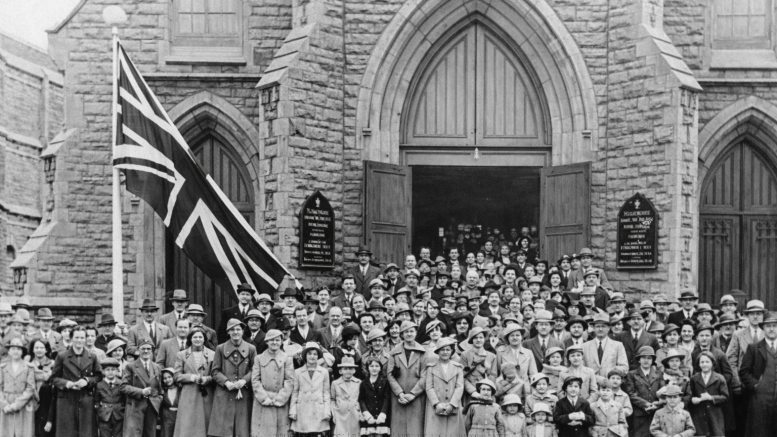
The actual purchase of the Holy Trinity building took place in August 1925, while the hatreds still divided the Greeks. A group of “hot blooded Venizelists” led by G. Kalfakis, N. Fragalexis, T. Skaperdas, N. Manolakos, A. Peppas, P. Charalambous, K. Karakasis, A. Naoum, G. Mytilineos, P. Goulakos, K. Alexopoulos, S. Rondogiannis, E. Papadakis, V. Xenakis, M. Chatzidakis, D. Apostolopoulos, P. Adamako and many others still “venizelists,” broke away from the community of the Annunciation. At the beginning of August 1925, with a down-payment of two thousand dollars, they purchased for fifty thousand dollars of credit the Methodist church at the corner of Sherbrooke and Clark. On December 25 of that same year, the church was renovated and handed over to Orthodox worship in the name of the Holy Trinity, with Archimandrite A. Pallikaris presiding.
The relevant minutes of the eventual merger were signed on behalf of the Greek Orthodox community of the Annunciation by Panagiotis Merakos, Dimitrios Theodoropoulos, Apostolos Zarafonitis, Konstantinos Kourtis, Nikolaos Tzelos, Spyros Kolyvas, and Panagiotis Agiorgitis. On behalf of the Greek Orthodox community of the Holy Trinity, the signatories were Spyros Adrianopoulos, Ioannis Spiliotopoulos, Christos Notarios, Nikolaos Beis, Panagiotis Polychronis, Ioannis Apostolakos, Panagiotis Dragonas, Panagiotis Adrianopoulos, Giorgos Gavaris, and Kostas Karakasis. The signing of the union agreement took place in an atmosphere of full enthusiasm and with the blessings of Archimandrite Arsenios Pallikaris. After the unification of the communities of the Annunciation and Holy Trinity, the assets of the Greek Orthodox community of the Annunciation, including the church and the school building, were sold to the Hungarian community for economic reasons. The new Greek Orthodox community of Montreal was then limited to the newly acquired church of the Holy Trinity and the adjacent buildings. After being renovated, these structures served community needs until 1970 as the Socrates community school classrooms.
The twenty year period from 1932 to 1952 is considered the most insignificant because it was not distinguished by large and noteworthy creative efforts. It is important to remember that during this time, an economic crisis, the Second World War, and a Civil War in the motherland took place. During the German occupation from 1941 to 1944, and also during the Civil War from 1944 to 1950, the community contributed unimaginably through the Greek War Relief program to the relief of those who suffered from the war. In the meantime, from 1947 to 1952, the Greek immigrants in Montreal grew from three thousand to five thousand, while the immigration waves that followed after 1950 created large community needs. The Greek Orthodox church of the Holy Trinity and the cramped and unsuitable school building were deemed insufficient.
The focus on heritage remains a priority for Greek officials who visit the diaspora. Panagiotis Skandalakis, the former deputy minister of foreign affairs responsible for subjects concerning Greeks abroad, emphasized that Hellenic education is a priority. He spoke in an interview to the newspaper “Apofasi,” saying: “The Greek Minister, in the interview, after thanking the Greeks of the diaspora, who contributed to the financial support of those affected by the deadly earthquake in the countries of SE Asia, mentions that the Diaspora Greeks are a priority for the government, while the goal of its policy with a four year horizon, is the strengthening of their ties with the mother country, the preservation of their national identity, religion, tradition, the Greek language as well as the strengthening of Greek education abroad.”. Skandalakis stressed: “the relations he maintains with the expatriates are relations of love and mutual trust.”.
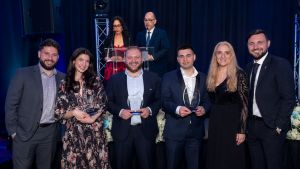
Community pride is also reflected in the achievements of its youth and the visits of national figures. A commemorative photo in Toronto shows the junior Alex Pappas standing between Otto Rehhagel and his father while wearing the jersey of Angelos Charisteas, the number nine. Such moments reinforce the importance of maintaining Hellenic identity through sport and public celebration, reminding the community of the historic victory of the Greek national team.
In Quebec, the community continues to navigate its relationship with the provincial government regarding education. Education remains the cornerstone of preserving the Greek language for future generations, and the community remains vigilant in protecting these rights.
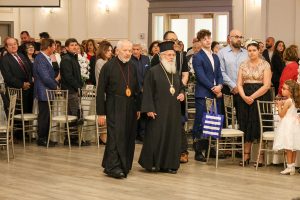
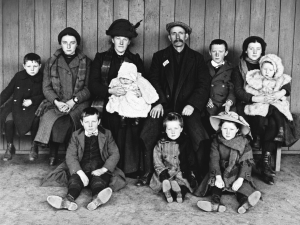
The story of the Montreal community is also one of recognizing the first families, our roots. These ceremonies serve to remind the younger generation of the work and dedication required to build and maintain the institutions they use today.
The preservation of history is a continuous task. The community has moved forward from the fire, but it carries the lessons of the past. The legacy of the Holy Trinity lives on in the current structures and the spirit of the Greek Orthodox community of Montreal. The unity achieved after the 1931 merger remains the standard for community action.
In November 1954, community leaders called a general assembly that decided on the immediate establishment of a Special Fund for New Community Buildings. To this account, they transferred sixty-three thousand dollars from the treasury of the community for new community buildings.
The aftermath of the January 16 1986 fire in the next issue of THE MONTREAL GREEK TIMES