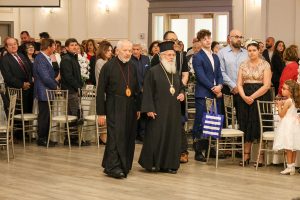
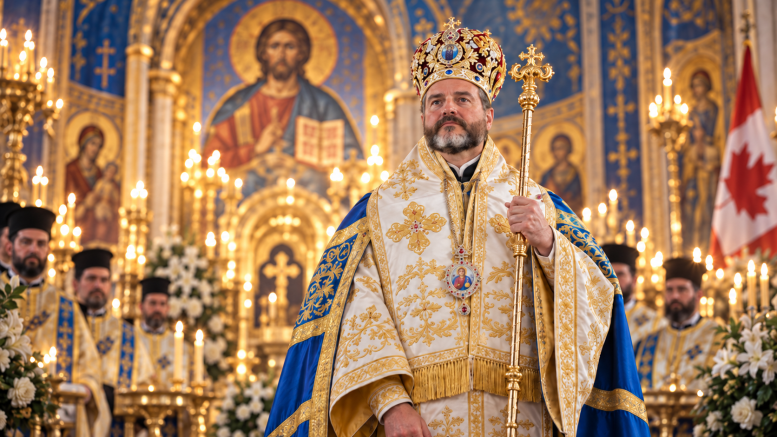
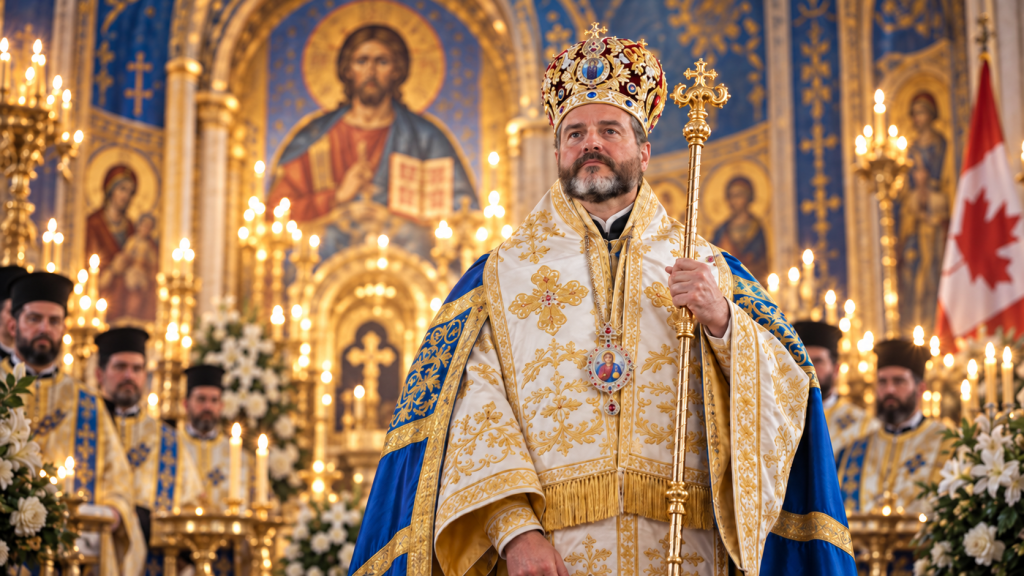

The acclamation “Axios,” the ancient Greek cry meaning “worthy,” rose from a packed congregation inside St. Nicholas Greek Orthodox Cathedral in Toronto’s Scarborough district on the afternoon of September 19 2026, as Archbishop Apostolos of Canada ascended the archiepiscopal throne. Families from across Ontario and beyond filled the nave and the balcony, many holding phones aloft for relatives watching from afar. The ceremony opened a new chapter for the Greek Orthodox Archdiocese of Canada and the parishes, schools and community institutions that have anchored Hellenic life in this country for generations, and it raised pointed questions about how the Archdiocese communicates with the Greek-Canadian public it serves.
A representative of the Ecumenical Patriarch of Constantinople presided over the enthronement. The Holy and Sacred Synod of the Ecumenical Patriarchate elected Apostolos unanimously on July 22. He previously served as metropolitan of New Jersey, arrived in Toronto on September 16 and succeeds former archbishop Sotirios, whose long tenure shaped the Canadian Archdiocese.
The enthronement address, delivered in Greek and English, spoke directly to the experience of the diaspora. Apostolos described Canada as “the land where our ancestors arrived with hope, worked, created, built churches, schools and church communities and laid the foundations of a living Greek Orthodox presence.”
The Greek language stood at the centre of his remarks. He called it “a living ark of memory, truth and wisdom,” adding: “It is a bridge between the generations. It is part of our identity.” In the English portion, he pledged to strengthen schools, support teachers and renew educational programs, and he urged young people to take part in Greek education, community service and volunteer work. For Montreal, home to one of the largest Greek communities in the country and its network of community schools, that emphasis carries direct weight.
He also recognized the varied origins of Greek Canadians, from regions across Greece to Cyprus, Pontus, Cappadocia, Asia Minor, Eastern Thrace and Constantinople, saying these places, histories and memories “enrich us and unite us.” He named unity as the defining word of his tenure and said a person can be “at once a good Canadian, a conscious Greek and, above all, a faithful Orthodox Christian.” The enthronement Divine Liturgy was celebrated the following morning, September 20.
For Greek Canadians outside the church, the event unfolded almost entirely out of view. No professional live video feed was made available to broadcast media. The only transmission from the Archdiocese came from a single mobile phone held vertically, with an operator whispering beside the microphone, hands passing in front of the lens and constant shaking. The owner of a Greek-language television station in Florida WZRA Channel 48, searching for a usable signal, contacted The Montreal Greek Times for help and ultimately aired nothing. Community broadcasters in Canada with the equipment and experience to produce a professional signal had no role in the coverage.
Access inside the cathedral followed a visible hierarchy. Media outlets from Greece moved through areas closed to others, including positions in front of the sanctuary, while other Greek-Canadian journalists were directed to the balcony. Marianna Michalitsianou of The Greek Press in Toronto said she was turned away at the door by an official who doubted she was media, and entered only after volunteers at the entrance recognized her. She was then kept from moving forward to take photographs, while at least two outlets from Greece remained at the front throughout the ceremony. Other diaspora outlets received no reply to their requests. The publisher of The Montreal Greek Times asked publicly whether a pool arrangement had been established, the standard practice at high-profile events in which one designated crew shares clean photos and video with all accredited media. No such arrangement was announced.
“We are talking about the basic professional organization of a major public church event: media accreditation, briefings, a press position, a clean television feed, proper sound and one person responsible for answering the media,” the publisher wrote. “It is Media Relations 101.” He argued that an event of this scale requires a common, non-exclusive professional feed and clear access rules applied equally to every outlet. By favouring media from Greece and sidelining the community press, the organizers left thousands of Greek Canadians in Montreal, Vancouver and elsewhere, along with viewers in the United States, to follow a landmark moment for their Church through selfies, fragments and shaky vertical clips.
A reception followed the enthronement ceremony, at which further speeches were delivered. The few amateur videos of the reception circulating online are too fragmentary to allow those remarks to be reported with accuracy. The Montreal Greek Times requested access to the enthronement and received no response, and under the arrangements in place, independent professional reporting by local Greek-Canadian media was not possible. Details in this report are therefore limited to publicly available accounts and material. Montreal Greek Radio and Montreal Greek TV, part of The Montreal Greek Times, reported and broadcast the enthronement using the limited information that was available.