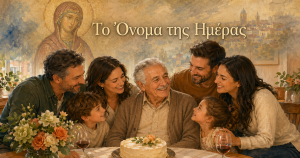
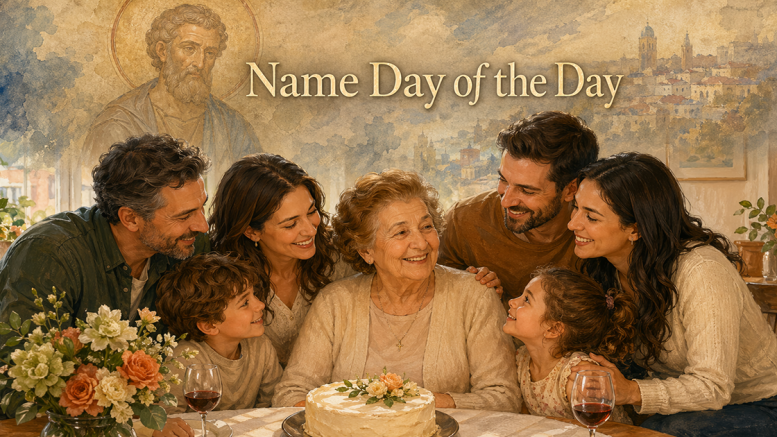
Today, every Vera you know can be part of a Greek name day. The day also belongs to the rarer Greek names Ierotheos and Kallisthenes, but Vera is the one most likely to turn up in a classroom, an office or on your contact list, making it an easy tradition to share with someone who may have never heard of name days at all.
Vera has a long cross-cultural life. In modern use it often comes through Slavic languages, where vera means “faith,” but it also settled comfortably into Western European naming and English usage generations ago. The Greek form Verina appears as a related local form in today’s celebration, while Ierotheos comes straight from Greek elements meaning “sacred” and “god,” and Kallisthenes from kalli-, “beautiful,” and sthenos, “strength,” a name known since classical antiquity.
In Eastern Orthodox Christianity, a person’s name day is the feast day of the saint after whom they were named at baptism.
That gives today a lovely range of personalities. It suits the Vera at work whose calm steadiness makes everyone trust her with the last-minute problem, the theia Verina who keeps family stories alive without ever making a performance of it, and the old friend named Kallisthenes whose presence has a kind of quiet force to it. Even Ierotheos, uncommon as it is, carries a stately sound that feels memorable the moment you hear it.
Name days are one of those customs that travel well because they are so easy to pass on. A quick message to a cousin named Vera, a colleague with the same name, or even someone you know only casually can open a warm conversation about Greek culture in a way that feels personal rather than formal.
Chronia Polla! to everyone celebrating today, Greek and non-Greek alike. If you know a Vera, send the wish along today and let a small Greek tradition land somewhere unexpected.