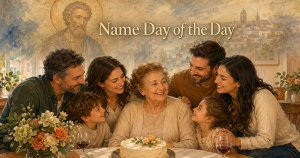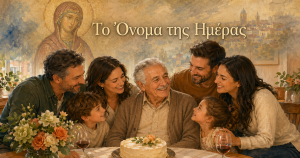
Today’s name day may be unmistakably Greek, but it still travels well. If you know a Kyriaki, a Kyriakos, or even someone whose name appears in a related form like Kyrie, today is a chance to share one of the warmest Greek customs outside the family group chat. It is the kind of tradition that can start with your godmother Kiki and end with a co-worker hearing “happy name day” for the first time.
Kyriaki comes from the Greek κυριακή, a word built from κύριος, “lord” or “master,” and in Greek it also became the ordinary word for Sunday, the Lord’s Day. The masculine counterpart Kyriakos follows the same root, and related forms travelled into Late Roman as Cyriaca and into other European languages in smaller, rarer branches. Unlike names that passed widely through Latin, French, and English, this one stayed closely tied to Greek speech and Greek Christian naming practice, which is part of what gives it such a strong cultural signature.
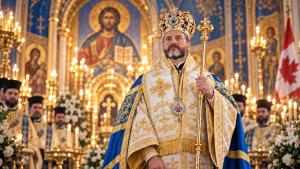
The name day tradition originates in Eastern Orthodox Christianity: a person’s name day is the feast day of the saint after whom they were named at baptism.
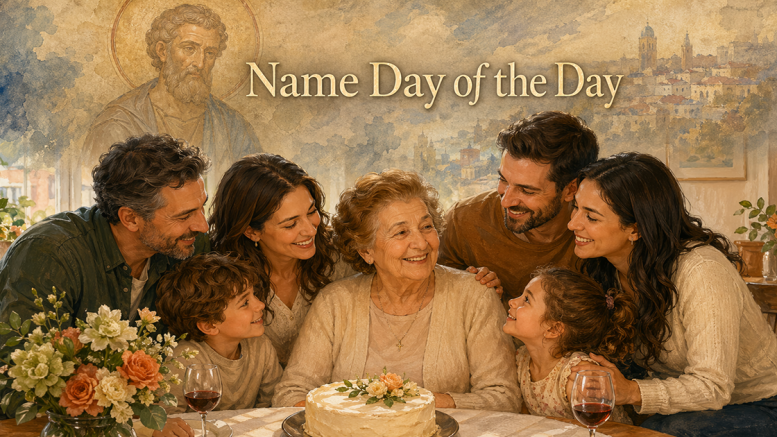
That gives the day a special closeness for the yiayia Kyriaki who keeps everyone’s birthdays in her head, for the cousin everyone calls Kiki, and for the quiet uncle Kyriakos whose name still sounds formal on paper but familiar at every family table. Even the friend saved in your phone as Sandy or Ria may be carrying one of today’s celebrating forms without most people around them realizing it.
Chronia Polla! to everyone celebrating today, in Greek and non-Greek circles alike. If you know a Kyriaki, Kyriakos, Kiki, Kika, Korina, Sandy, Ria or another form of the name, send the message today and let a small piece of Greek tradition land somewhere new.