
Local Journalism Initiative Reporter
A hall filled with the sound of the lyra and the measured steps of traditional dance set the tone at the Palace Convention Centre in Laval on March 28, 2026, where members of the Cretan community and their guests gathered for the annual dance of the Cretans’ Association of Montreal. The evening unfolded as both a cultural affirmation and a civic gathering, bringing into focus the continuity of language, music, and heritage among Greek Canadians while highlighting the role of community institutions in sustaining regional identity across generations.
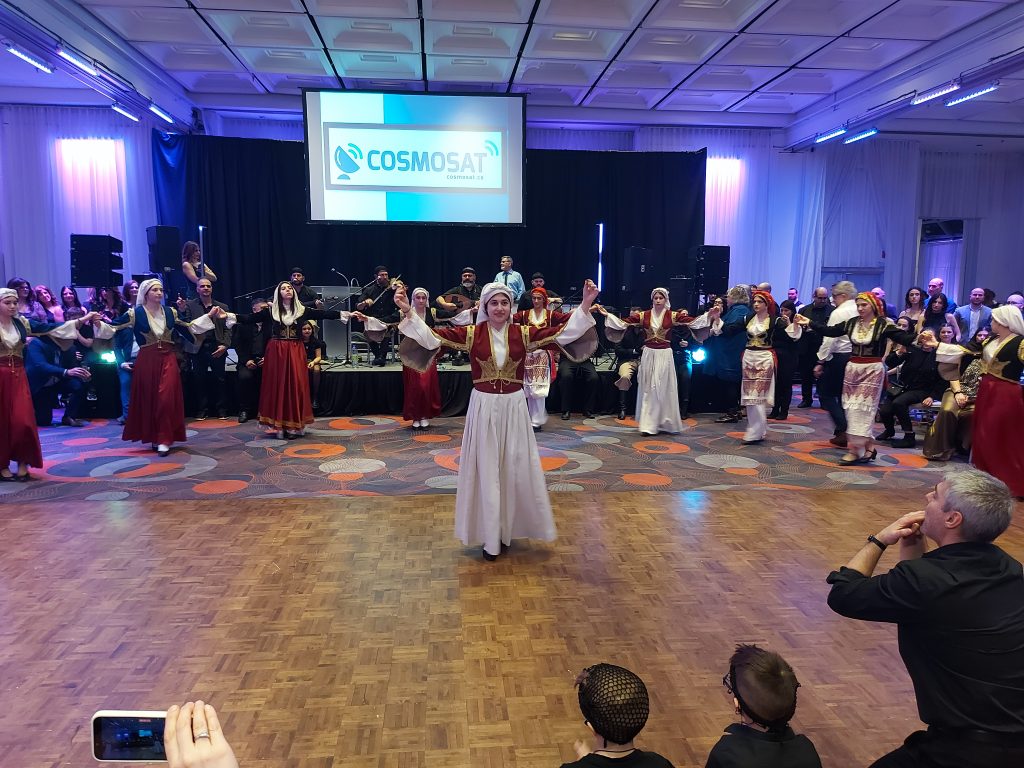
The program opened with welcoming remarks that framed the evening as a milestone for the association’s cultural work. “Tonight is very special,” one speaker told attendees, noting the presence of visiting artist Antonis Martzakis and his ensemble from Kissamos, Crete. The address also underscored the scale of youth participation, with organizers pointing to “90 of our children wearing traditional Cretan costumes,” a visible marker of continuity that resonated across the ballroom.
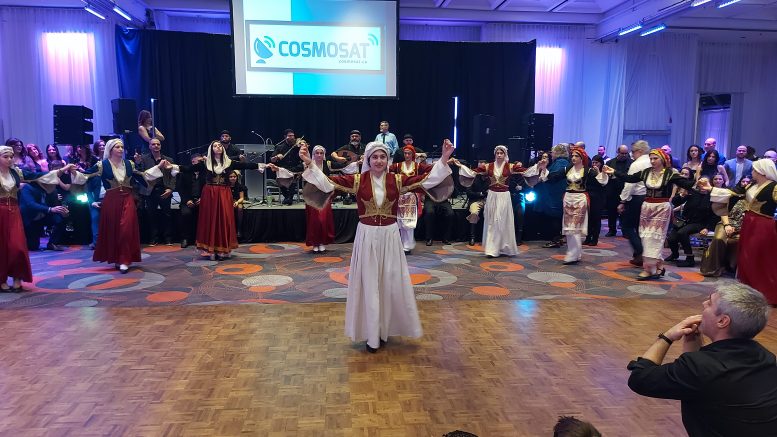
Throughout the evening, dance groups performed in coordinated formations, their movements reflecting regional styles preserved through years of instruction within the association. Rows of dancers in traditional red and white attire moved in unison across the floor, their steps guided by the steady rhythm of live musicians positioned at the rear of the hall.
Younger performers were also featured prominently, including children who took the floor individually and in groups, drawing sustained applause from families seated along the perimeter.
In an interview conducted for this newspaper, association president Emmanuel Revelakis placed the event within a broader community context. Attendance exceeded expectations, with “more than 750 people” present, a figure he described as a “huge success” compared with previous years. The turnout, he said, reflected both the appeal of the featured artist and the continu ed strength of the association’s dance programs. “People came for the artist and for the children who dance, and their families,” he noted, emphasizing the intergenerational character of the gathering.
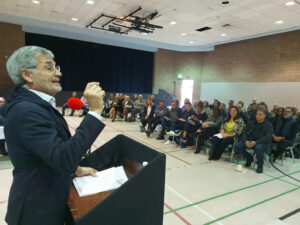
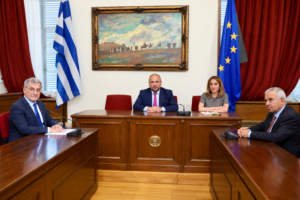
The event also drew the presence of officials and dignitaries visiting Montreal for Greek Independence Day commemorations, including Greece’s Deputy Prime Minister Kostis Hatzidakis, himself of Cretan origin. He addressed attendees and remarked on the scale of participation, stating that he “did not expect to see so many people” at a community dance, before offering a traditional verse associated with Crete. Local representatives and community leaders were also in attendance, reinforcing the event’s standing within the broader civic landscape.
Beyond the performances, the evening functioned as a social gathering anchored in shared customs. Guests dined together and remained engaged throughout the program, with many joining in later dances. Revelakis described the highlight of the night succinctly as “the celebration, the full celebration,” reflecting a sense of collective participation that extended beyond the stage.
The Cretans’ Association of Montreal has long positioned its annual dance as a focal point for cultural transmission, combining music, language, and costume within a structured community event.
Its activities throughout the year include dance instruction and cultural programming aimed at younger members, reinforcing ties to Crete while situating those traditions within the Canadian context.