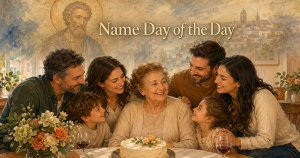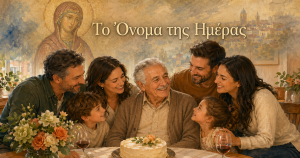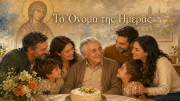
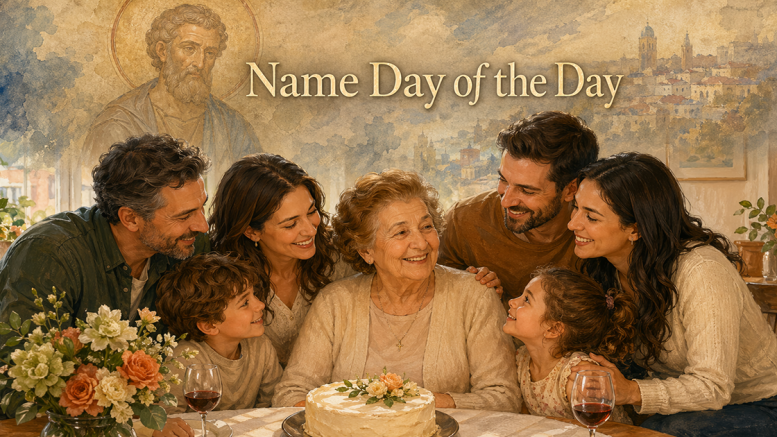
Across Montreal today, the Greek tradition of name days reaches further than family. Every Alice, Alicia and Alys you know, every Marina in the office, and every Alexandra, Alessandra or Alejandra in your contacts shares in the names being celebrated today. It is the kind of custom that travels easily: a quick message, a small explanation, and suddenly a Canadian friend is part of something old and warm.
Alice has one of those long European journeys that hides its age well. The English Alice comes through Old French Aalis from the Germanic name Adalheidis, built on elements meaning nobility and kind or type, while the modern Greek form Αλίκη settled naturally into Greek use and even echoes the Greek word aliki, “scarlet.” Marina comes from Latin marinus, “of the sea,” a name that moved easily into Greek and many other languages without changing much at all. Alexandra is thoroughly Greek, from Alexandros, combining alexein, “to defend,” and aner, andros, “man,” giving it the enduring sense of a protector.
The name day tradition comes from Eastern Orthodox Christianity, where a person’s name day is the feast day of the saint after whom they were named at baptism.
There is something vivid about today’s circle of names. An Alexandra often feels like the cousin who steps in first when something needs handling, calm and capable without making a show of it. Marina suits the friend who is always in motion through the city, moving from work to family dinner to a late coffee by the water as if she belongs wherever she lands. And Alice, in Greek ears, can carry a little brightness of colour too, like the stylish theia whose presence lifts the whole table before she has even sat down.
So if you know an Alice, Marina or Alexandra, Greek or not, today is a lovely excuse to reach out. Say Chronia Polla! and let them in on the tradition. Your classmate, co-worker or neighbour might not even know they are being celebrated today, which is exactly what makes the message memorable.