Today’s name day is less about spotting a James or Catherine in your contacts and more about sharing a beautifully Greek custom with someone who may never have heard of it. If you know a Despoina, a Tsambika, a Mika, a Tsambikos, a Skiadeni, a Genethlios or a Neratzia, today is a perfect excuse to send a message, say happy name day, and explain a tradition that still travels well in Montreal.
Despoina comes from the ancient Greek Δέσποινα, meaning “lady” or “mistress,” a title with deep roots in classical Greek religion and later life in Christian Greek usage. It is one of those names that stayed recognizably Greek across centuries, while the modern form Despoina or Despina also appears beyond Greece in places like Romania and Albania. The other names celebrated today are more local and distinctive in flavour: Tsambika is strongly tied to Greek island naming tradition, while Genethlios comes straight from Greek γενέθλιος, “of birth” or “birthday,” and Neratzia echoes the bitter orange tree, νεραντζιά, still vivid in the Greek ear.
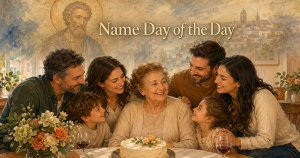
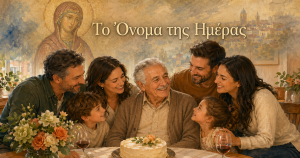
In the Eastern Orthodox Christian tradition, a person’s name day is the feast day of the saint after whom they were named at baptism.
Despoina has a natural poise to it, and everyone knows a theia Despo who can quiet a room without ever raising her voice. Tsambika feels warmer and more intimate, the kind of name you hear from a cousin, a godmother or the across-the-street neighbour who never lets you leave empty-handed. And if there is a Mika in your class, at work, or among your regular customers, today is an easy opening to share a custom that turns an ordinary weekday into a small celebration.
Some of today’s names are uncommon outside Greek circles, which is part of their charm. They carry place, language and memory in a way that does not need translation, only a little introduction. That makes them especially good conversation starters for Canadian-born Greeks who want to pass on something real and personal without making it heavy.
Chronia Polla! to everyone celebrating today, Greek and non-Greek alike. Text the Despoina, Tsambika or Mika you know, and if they are not Greek, all the better: you get to give them a small piece of Greek tradition they may not even know is theirs for the day.