Today, every Victor you know shares a name day with the Greek tradition, and the circle stretches further than one might expect. A Victor at work, a Vincent down the street, or even someone with the rarer classical names Minas or Minos can all become part of the conversation today, with Greek forms like Vίκτωρας, Βικέντιος, Μηνάς and Μίνως quietly standing behind them.
Victor comes from the Latin victor, “conqueror” or “winner,” a word built from the verb vincere, “to conquer.” Vincent follows a closely related Latin path, from Vincentius, linked to vincens, “prevailing” or “overcoming.” Minas is the Greek form of a late antique name used widely in the eastern Mediterranean, while Minos reaches much further back into Greek myth, the name of the legendary Cretan king preserved in classical literature and likely older than Greek itself.
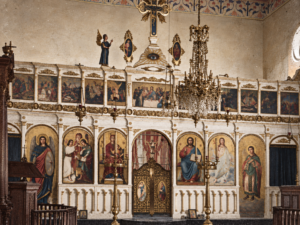
In Eastern Orthodox Christianity, a person’s name day is the feast day of the saint after whom they were named at baptism.
That makes today an easy day to think of the people these names bring to mind: the cousin Victor who always seems to land on his feet, the co-worker Vincent who carries himself with quiet steadiness, or the papou Minas whose name still sounds warm and familiar at every family table. And for a rarer name like Minos, the resonance is unmistakably classical, the kind of name that suits the old friend who loves history, stories and anything with a long memory behind it.
There is also a more unusual name in today’s circle: Draco, from Greek Δράκων, an ancient word meaning “dragon” or “serpent.” It survives in classical history through Draco of Athens and in English through the word “draconian,” which gives the name a sharp, unmistakable edge even now.
Chronia Polla! to everyone celebrating today, in Greek and non-Greek circles alike. If you know a Victor, Vincent, Minas or Minos, this is a good day to send a quick message, say happy name day, and share a small Greek custom with someone who may not even know the date belongs to them.