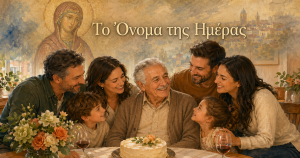
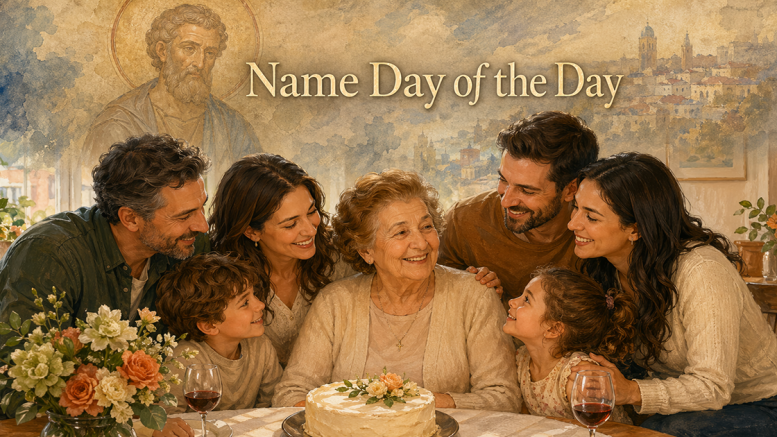
Today’s name day is an easy one to carry into everyday Canadian life. If you know a Melina at school, an Efimia in the family, or a Ludmilla whose friends shorten it to Mila, today is a good day to send a quick message and share a Greek custom that often surprises people in the nicest way.
Efimia comes from Greek Εὐφημία, built from eu, meaning good or well, and phemi, to speak. In classical Greek the word euphemia suggested words of good omen, respectful speech, and the avoidance of harsh language, which is also where English gets euphemism. Ludmilla comes through Slavic tradition, from elements meaning dear or beloved and gracious or favour. Melina is a modern Greek name strongly associated with meli, honey, which gives it its warm note of sweetness and gentleness.
In Eastern Orthodox Christianity, a person’s name day is the feast day of the saint after whom they were named at baptism.
That is why these names still feel so alive in conversation. Efimia suits the aunt whose calm words can settle a crowded kitchen before dinner is even on the table. Melina belongs naturally to the cousin who brings a little softness wherever she goes, or the co-worker whose kindness changes the tone of the whole office. And Ludmilla has that old-world warmth that still feels perfectly at home in Montreal, whether it belongs to a neighbour, a piano teacher, or someone’s grandmother who somehow remembers every birthday and every visitor.
Melina also carries a wider cultural familiarity than many people realize. It is recognizably Greek, but it also travels easily in English and French, and many non-Greek Canadians would hear it as a name they already know. That is part of what makes name days such a good conversation starter: they reveal quiet links between Greek naming tradition and the names already circulating through classrooms, cafés, offices, and family group chats.
Chronia Polla! to everyone celebrating today, Greek and non-Greek alike. If you know an Efimia, a Ludmilla, or a Melina, today is a lovely excuse to wish them well and introduce them to a tradition they may not even know they share.