
Local Journalism Initiative Reporter
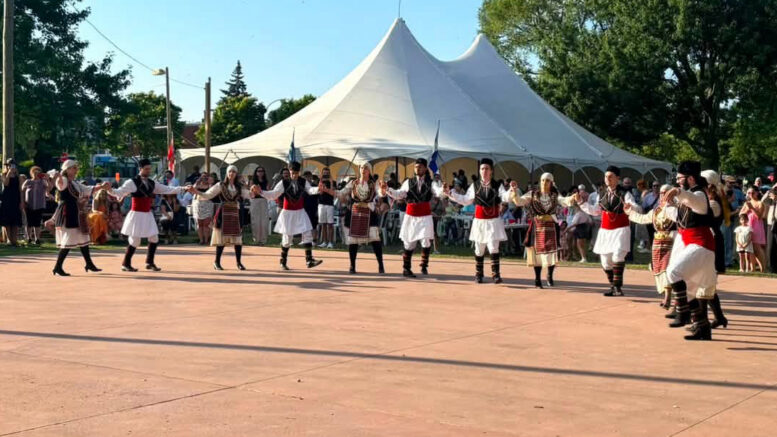
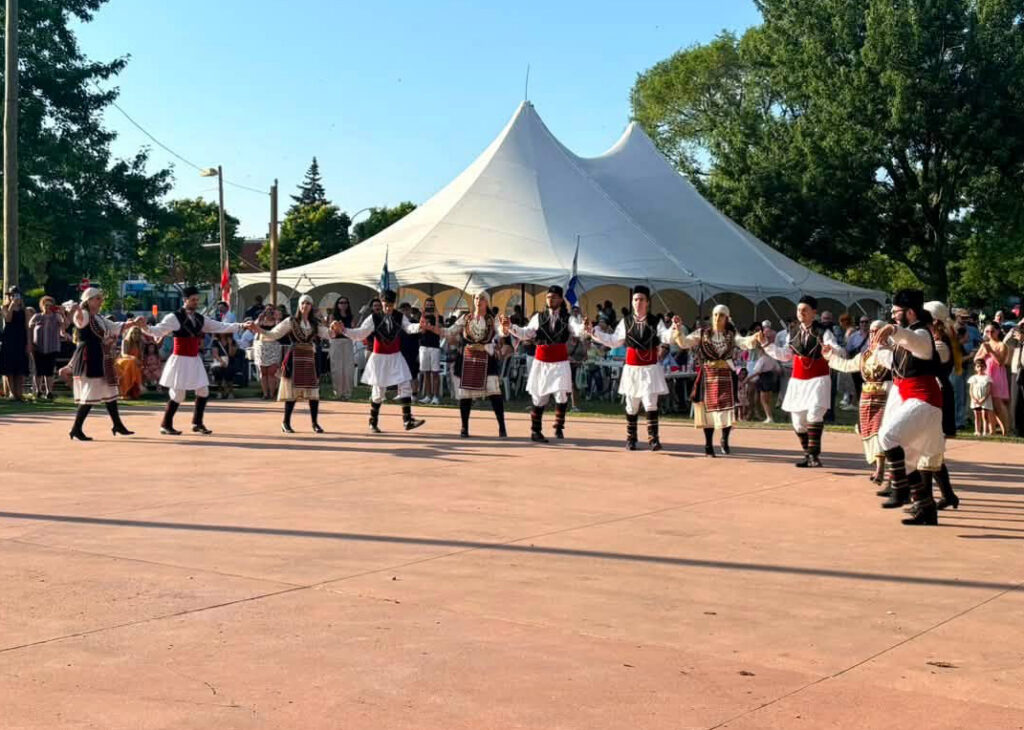
By the water’s edge at Parc des Rapides, under white tents pitched among the trees, the sounds of a Greek village square carried across LaSalle for three days in mid-July. Dancers in embroidered vests and traditional costume circled the open square hand in hand, smoke rose from long charcoal grills lined with skewers, and families filled rows of tables on the grass from Friday evening until Sunday night. Behind the music and the souvlaki stood the story that gave the weekend its weight, one that continues to unfold this autumn: a small parish growing steadily younger, a volunteer corps that labours for months, and a summer festival that has become one of the surest expressions of Hellenic identity in the southwest of the island of Montreal.
The annual festival of the Saint Dionysios of Aegina parish, held July 10 to 12 with free admission, falls on the second weekend of July each year and exists to sustain the church itself. “Every dollar we collect from this festival comes directly to the church, and we have great need. We are a small church here on the edge of Montreal, in LaSalle,” said Father Spyridon, the parish priest, speaking in Greek for the interview. Five years into his ministry there, he described a congregation in visible renewal. Services, sermons and the liturgy are offered in both Greek and English, and the response has followed. “The children have answered with great zeal and love. We can say that about 50 per cent of the congregation now is young people under 40, and families,” he said. The parish also runs a youth group on Monday evenings along with catechism and Bible study classes during the week.
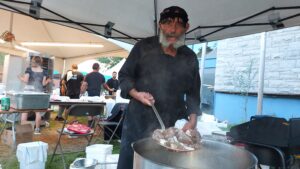
Longtime parishioners measure the change against decades. “I have been close to this church for 40 years. I have never seen so many children,” said Kostas, who served 15 years as parish president and now sits as vice-president. At the grills, where volunteers had passed the 600 souvlaki mark by Saturday, the marinade remains a secret entrusted to a single parishioner who prepares it behind a locked door. The tzatziki, salads and lemon and oil dressing are all made on site by volunteers, among them a griller of Zakynthian origin who has stood at the spits for 19 years.
Parish president Dimitri Giannenas, in his fifth year leading the council, said preparations begin six months ahead, with work every month from January. Asked for the souvlaki recipe, he named a different ingredient. “The recipe is love. The volunteers who work so hard, for months, and I mean months, to prepare it,” he said. “I am glad to help my community. I am doing something bigger than myself.” He said the park setting, with its lawns and the river in front, draws Greeks from across the Montreal region along with friends of Italian, English and French background who come for the pastries, the souvlaki and the dancing.
The weekend also drew figures from the wider diaspora. “We must always support Hellenism wherever we find ourselves,” said Halatsis, a former president of the Hellenic Congress of Canada, who congratulated the president and council on the organization. Father Andreas, who served the parish for many years, returned among the faithful, and Kyriakos Polymenakos, president of the regional council of the Hellenic Community of Greater Montreal, attended as a guest, noting a summer circuit that continued with the community’s own festivals in Laval and Park Extension in August.
The next edition at Parc des Rapides will mark the festival’s 45th year. Giannenas said the council begins organizing it in October.