Today’s name day may be rare, but that is part of its charm. If you know an Agrippina, or even an Italian Agrippina, a Spanish Agripina, or someone who keeps the classical name Aristocles, they share today’s celebration with the Greek tradition and make for a memorable text message and conversation starter.
Agrippina comes from the Roman family name Agrippina, the feminine form of Agrippa, a name known from classical Latin history and carried into Christian use by Saint Agrippina of Rome. Aristocles, from Greek Ἀριστοκλῆς, is built from aristos, “best,” and kleos, “glory” or “renown,” one of those unmistakably ancient Greek compounds that sound as if they stepped straight out of classical literature. In Eastern Orthodox Christianity, a person’s name day is the feast day of the saint after whom they were named at baptism.
Agrippina has a stately, old-world presence to it, the kind of name that suits a yiayia whose voice can quiet a room, or the across-the-street neighbour everyone trusts with a spare key in summer. Aristocles carries a more scholarly resonance, easy to imagine on the professor who still fills the board by hand, or on the cousin who always has one thoughtful comment that changes the whole table’s conversation. Even Lulu, Louli or Loula, included in today’s Greek calendar, brings in a softer, affectionate note familiar from family nicknames and everyday warmth.
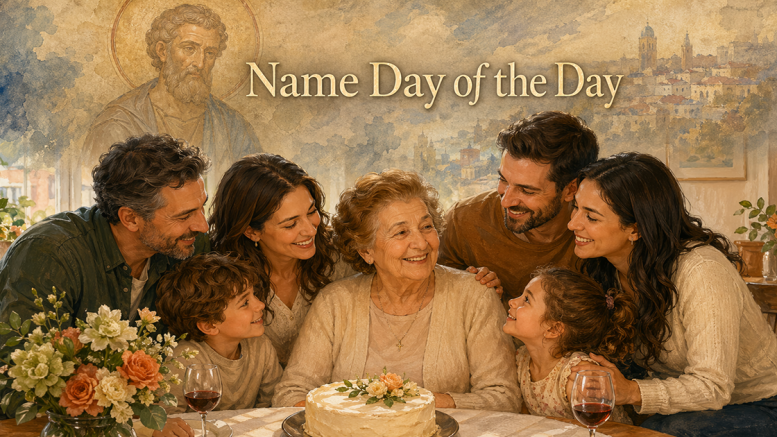
That is part of what makes name days so easy to share in Canada. Some names arrive through ancient Greek, some through Latin, some through family habit and nicknames, but they all create a small opening between cultures and generations. A Greek-Canadian can wish a theia Happy Name Day in the morning and then explain the same custom to a co-worker by lunch.
Chronia Polla! to everyone celebrating today, in Greek and non-Greek circles alike. If you know an Agrippina, Aristocles, Lulu, Louli or Loula, send the message. They may not even know today is theirs.