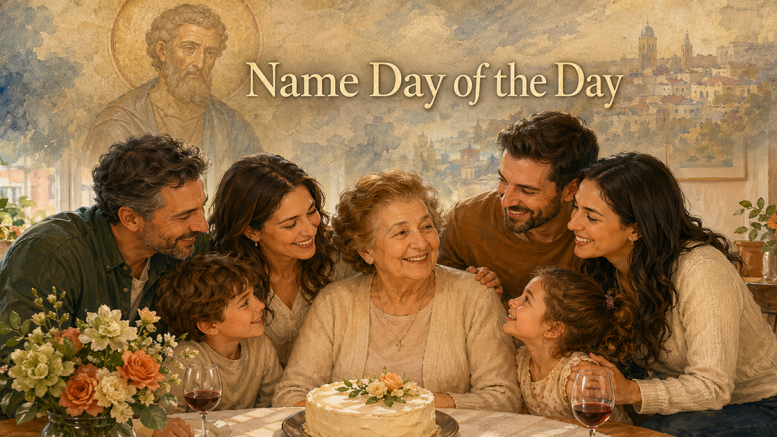
Today’s name day travels easily beyond Greek homes. If you know a Valeria, a Cecilia, or even the rarer Philemon, this is one of those small Greek customs that can turn into a warm text message and a good conversation at work, at school, or across the street.
Valeria and the wider Valerios family of names come from the Latin verb valere, meaning to be strong, healthy, or vigorous, and from the Roman family name Valerius. Cecilia comes through Latin Caecilia, the feminine form of Caecilius, a long-travelled Roman name that passed into many European languages. Philemon is older in a different way: it comes straight from Greek Φιλήμων, built on the root philein, “to love,” giving the name a tone of affection and warmth. In the Eastern Orthodox Christian tradition, a person’s name day is the feast day of the saint after whom they were named at baptism.
You can feel the names differently in the people who carry them. A Valeria in the office often sounds composed and steady, the kind of colleague who keeps things moving when everyone else is tired. Philemon has that old Greek gentleness to it, easy to imagine on a patient grandfather, a thoughtful professor, or a quiet family friend who remembers every birthday without needing to make a show of it. And Cecilia still carries a certain grace in everyday life, whether it belongs to a cousin, a music teacher, or the neighbour whose presence always seems calm and polished.
Today also brings in related Greek forms such as Valerianos, Valeriana, Valeris, Valia, Philemonas, Philemoni, and Cecilia’s Greek variants Sesilia, Kekilia, and Kikilia. Some calendars also note Iakovos and Giakoumis alongside the day, widening the circle even more.
Chronia Polla! to everyone celebrating today, Greek and non-Greek alike. If you know a Valeria, Cecilia, or Philemon who has never heard of a name day, today is a perfect day to send the wish and share a small piece of Greek tradition with them.