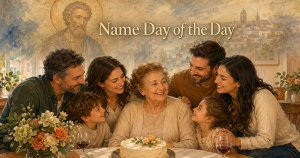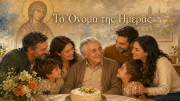
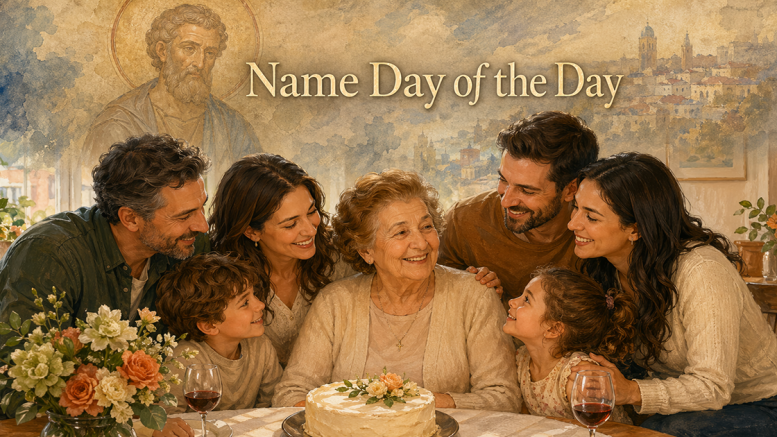
Today’s name day reaches a little further than Greek family circles. If you know a Nonna or a Nona, including someone whose name comes through Russian or Georgian use rather than Greek, she shares the name being marked today. It is the kind of tradition that can turn an ordinary text into a small cultural exchange.
Nonna comes from Late Greek Νόννα, a woman’s name known in Greek through early Christian history and later carried into other languages. The name is also found in Slavic usage, especially Russian, which helps explain why it can feel both distinctly Greek and quietly international at the same time. Unlike many familiar English names that passed through Latin and French into Canada, Nonna stayed closer to its eastern Christian and Greek form.
In Eastern Orthodox Christianity, a person’s name day is the feast day of the saint after whom they were named at baptism.
There is a warm steadiness to this name. It suits the godmother who keeps family ties intact without making a show of it, the across-the-street neighbour whose kindness is noticed more in actions than words, and the older cousin who somehow remembers every birthday, graduation and first day at a new job. Even when the name is uncommon, it leaves a strong impression.
Because Nonna is not widespread in everyday Canadian naming, today is also a good reminder that name days are not only for the most familiar names. Sometimes the most interesting conversation starts with a name your co-worker has never heard celebrated before. A quick “happy name day” to a Nonna or Nona can open the door to a lovely explanation of a Greek custom that still travels well in Montreal.
Chronia Polla! to everyone celebrating today, Greek and non-Greek alike. If you know a Nonna or Nona, send the wish along. She may not even know today is her day.