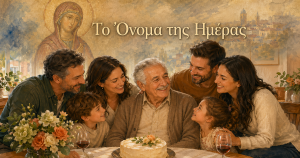
Today’s name day is a chance to notice how Greek names travel in different ways. Chrysostom is uncommon in English, but it still appears across Christian and literary history, while Damaskinos carries a place-name that many non-Greeks already know through Damascus. If you know a Damaskinos, a Damaskini or a Chrysostom, today is a good day to send a message and share a tradition that feels both Greek and surprisingly universal.
Damaskinos comes from Greek Δαμασκηνός, meaning “of Damascus” or “from Damascus,” following an old Greek pattern of turning a place into a personal name. The city name Damascus passed from ancient Semitic usage into Greek and Latin, giving the name a long eastern Mediterranean history. Chrysostom comes from Greek Χρυσόστομος, built from chrysos, “gold,” and stoma, “mouth,” a vivid classical formation that survived into English as Chrysostom and into other European languages in related forms.
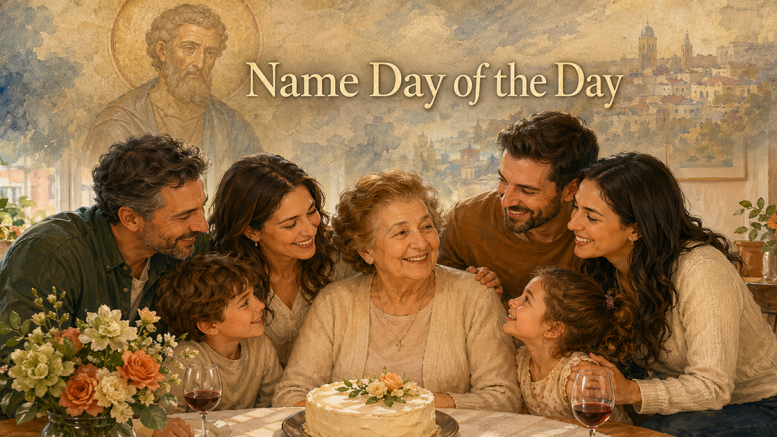
In Eastern Orthodox Christianity, a person’s name day is the feast day of the saint after whom they were named at baptism.
There is something memorable about Chrysostom even before you know anyone who bears it. A professor with a gift for clear lectures, a godfather whose toasts somehow become the line everyone repeats all night, or the local barber who can talk to anyone without ever sounding hurried all fit the name’s warm, eloquent ring. Damaskinos feels different: older, steadier, almost geographic, the kind of name you might hear on a papou, a respected neighbour, or a customer whose presence carries a little quiet weight.
So today’s celebration may be small, but it opens a lovely conversation. Chronia Polla! to everyone named Damaskinos, Damaskini and Chrysostom, and to anyone who shares these names in Greek or another language. Text a friend who may not even know they are being celebrated today, and let a piece of Greek tradition land naturally in Canadian life.