
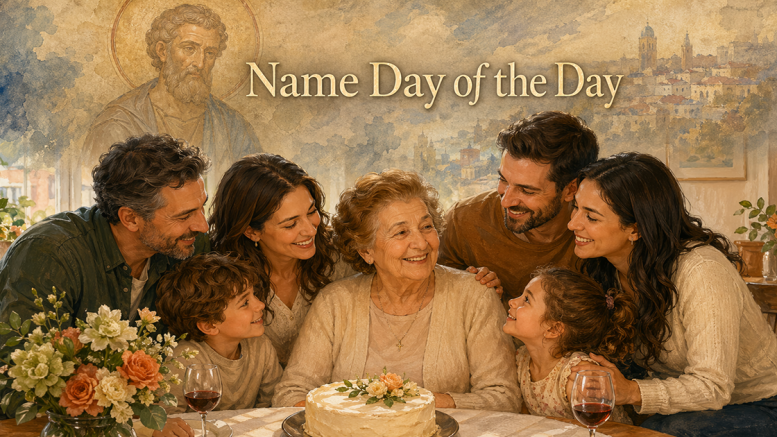
Today, every Jonah and Jonas you know shares a name day with the Greek tradition. That makes this one easy to pass along beyond family: the Jonah in your class, the Jonas at work, the neighbour down the street, even the friend who has never heard of a name day before.
Jonah comes into English through Greek Ἰωνᾶς, Ionas, which preserved the biblical name in the Greek-speaking world. Behind the Greek form stands Hebrew Yonah, meaning “dove,” a word that travelled widely through scripture, translation, and everyday naming until it reached modern English Jonah and the many European forms of Jonas. It is one of those names that moves easily across languages and cultures while keeping its quiet, memorable shape.
In Eastern Orthodox Christianity, a person’s name day is the feast day of the saint or biblical figure after whom they were named at baptism.
There is something gentle and steady about this name. You can picture a papou Ionas who never speaks loudly but always knows when to call, or a co-worker named Jonah who has a way of calming a room when everyone else is rushing. For some families it may be a younger cousin, for others an old friend, but the name carries well on people who bring a little peace with them.
So if there is an Ionas in the family, a Jonah in your contacts, or a Jonas in the office, today is a good excuse to reach out. Chronia Polla! to everyone celebrating, Greek and non-Greek alike, and especially to the friend who might be surprised to learn that today, in a small Greek custom, their name is being celebrated too.